
Category: Grammar
-

In English grammar, every complete sentence has two main parts: They work in partnership to form a complete thought. Once you discover how to identify the subject and predicate in a sentence, understanding sentence structure becomes much easier, and your writing becomes clearer. Understanding Subject and Predicate The subject tells you who or what the…
-
Learning English feels difficult when you don’t know simple daily conversation words. Many beginners understand basic grammar but still struggle to speak confidently in daily life. That’s because common daily talk vocabulary is rarely taught clearly. This guide is specially created for absolute beginners who want to speak English naturally and confidently. You’ll learn 50…
-
English beginners often struggle with words that look similar but perform different functions. Some words act as verbs, while their closely related forms act as nouns, which confuses writing and speaking. In this guide, we’ll explore common verb–noun confusing words for beginners, explain their meanings, and show how to use them correctly with simple examples.…
-
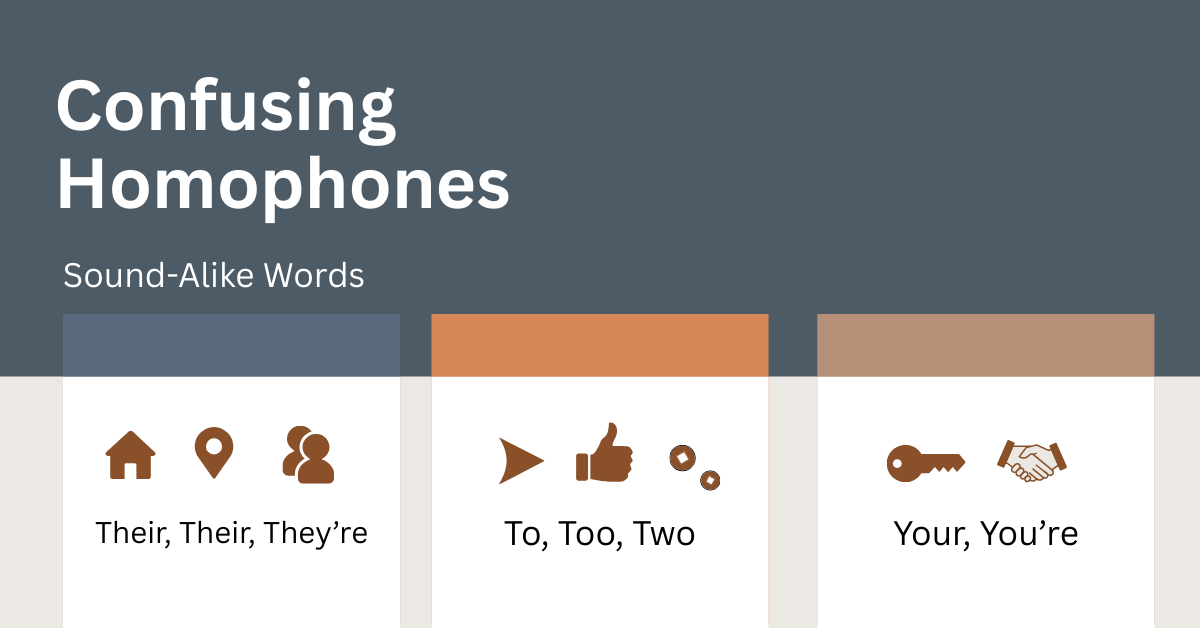
Learning English becomes difficult for beginners not because of grammar, but because of confusing homophones in English. These are sound-alike words in English that: As a result, learners often hear correctly but write incorrectly. For example: This is one of the biggest causes of common homophone mistakes in writing. If your basics are weak, first…
-
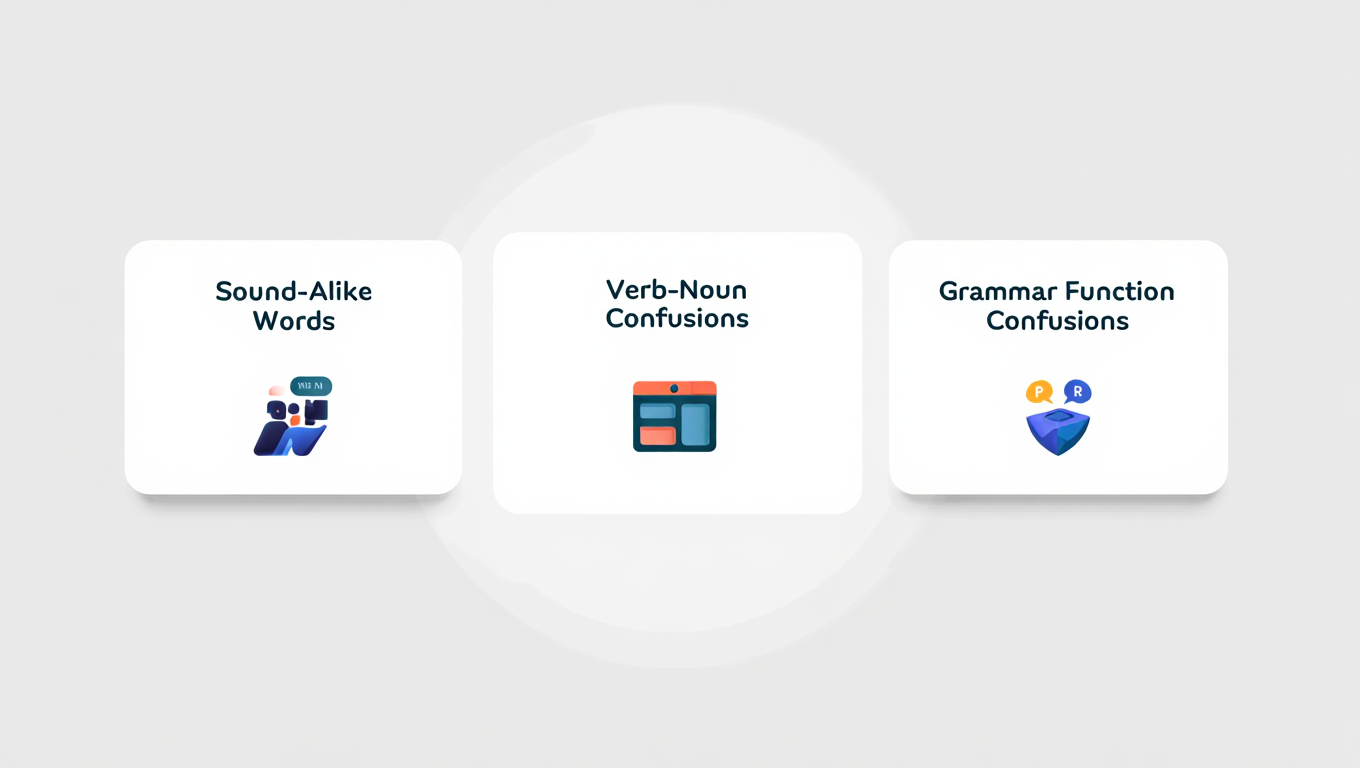
Learning English is exciting—but for many beginners, it quickly becomes frustrating. Not because of grammar rules. But because of the confusing words in English. These are words that: As a result, learners often make mistakes even when they understand the basics. For example: These small differences can completely change the meaning. If your foundation feels…
-
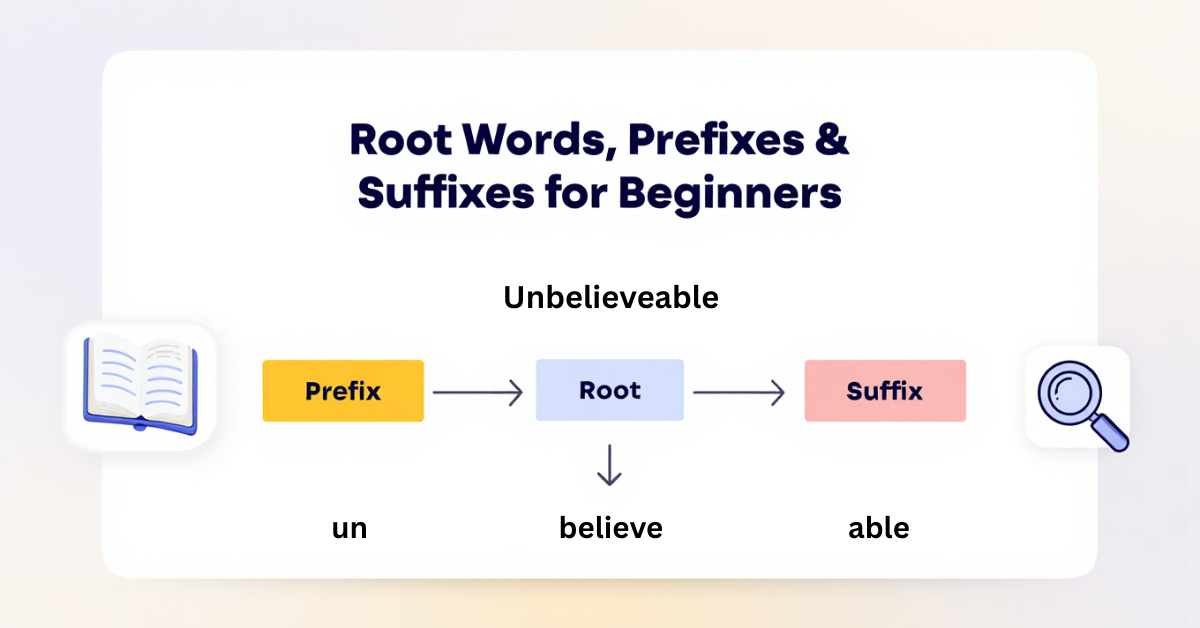
Imagine understanding hundreds of English words without memorizing each one. Root words, prefixes, & suffixes are your beginner vocabulary secret weapon. Most beginners struggle with vocabulary because they randomly try to learn words. As a result, they forget quickly and feel stuck while reading or writing. The smarter approach is to understand how words are built.…
-
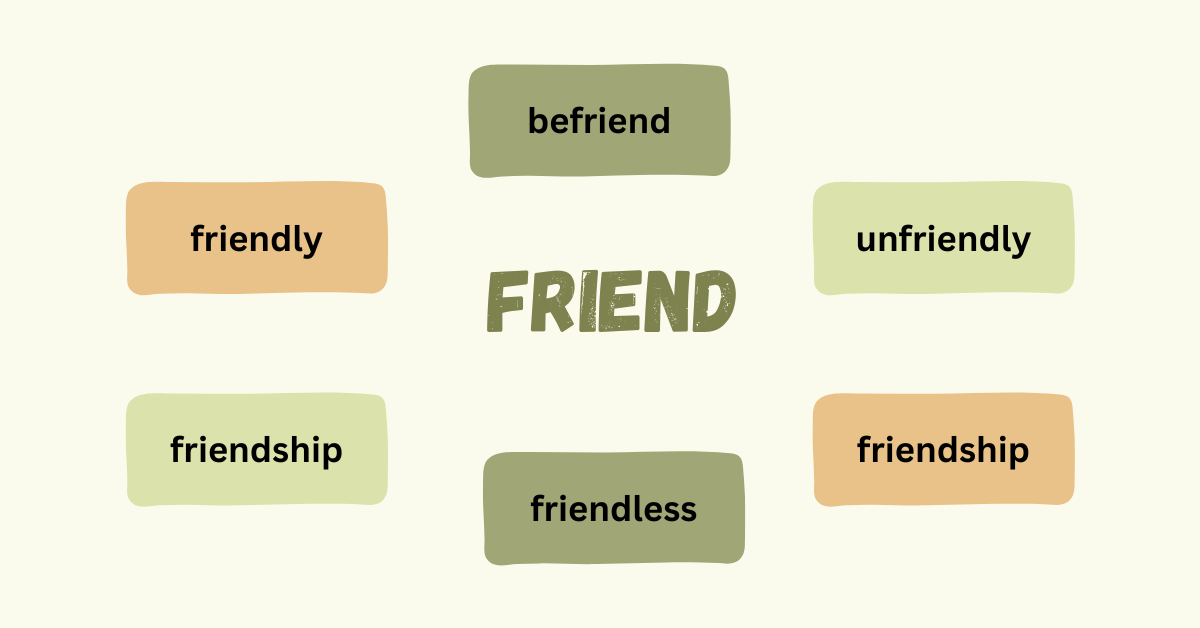
Have you ever noticed how happy, happiness, and happily feel like members of the same group?That’s because they belong to the same word family. Instead of learning English words one by one, you can learn them in connected groups. This method makes vocabulary easier to understand, remember, and use in real communication, like learning a…
-
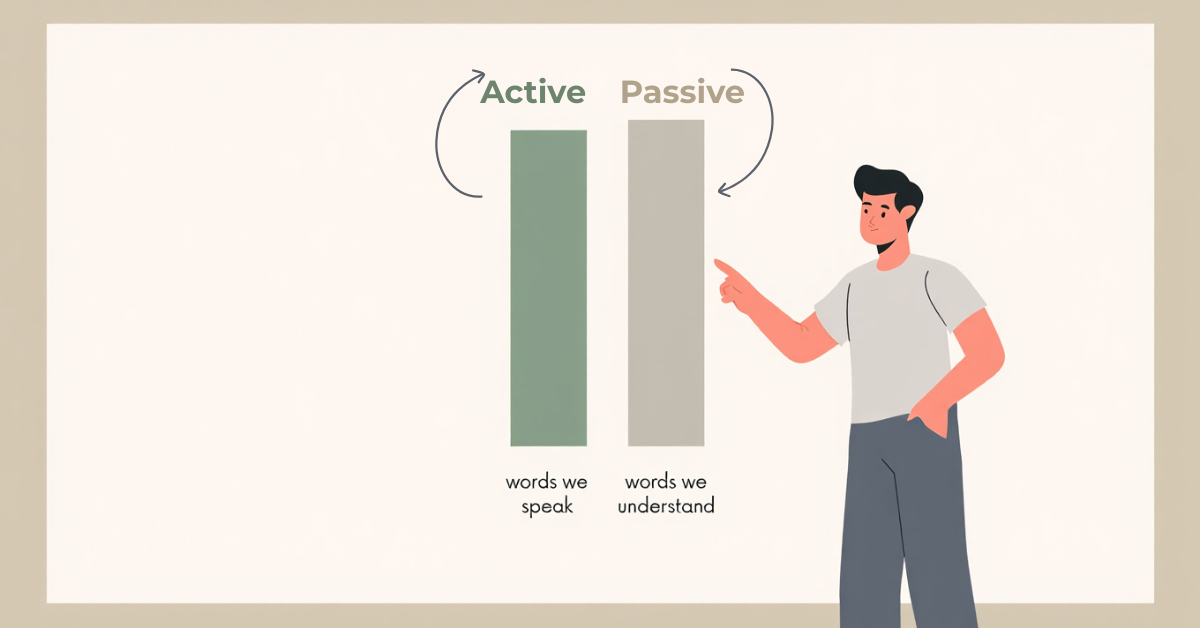
Understanding vocabulary is one of the most important steps in improving writing and speaking skills. Many learners know hundreds of English words, but they still struggle to use them in conversations or writing. This happens because not all vocabulary works the same way in our minds. Some words are easy to use in daily communication,…
-
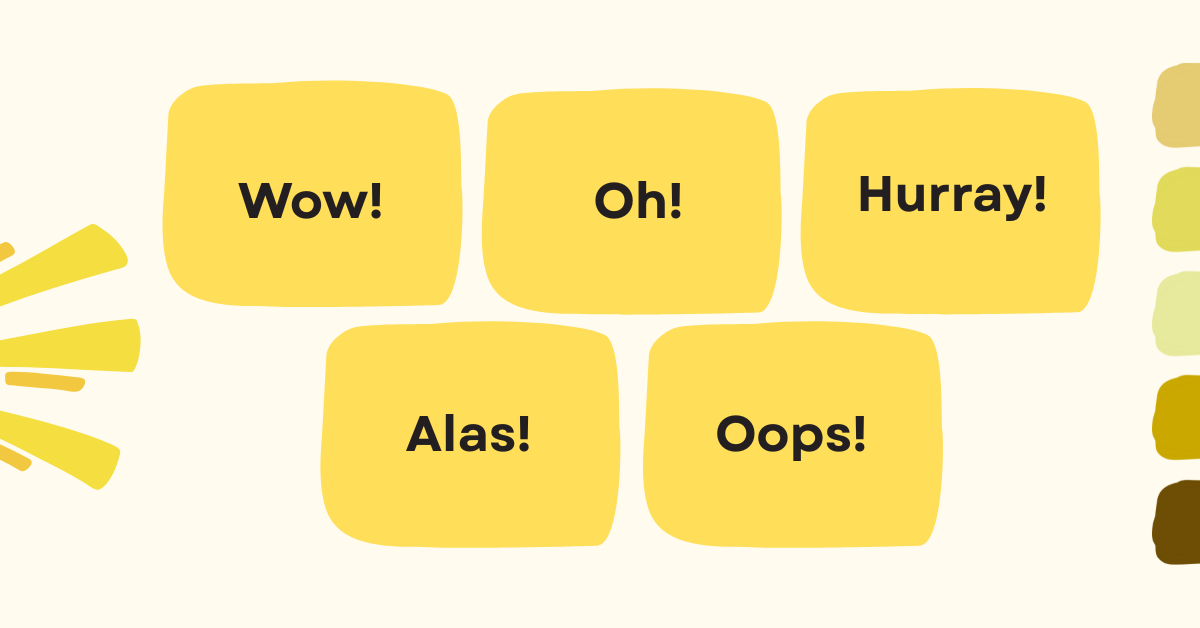
Have you ever said “Wow!” when surprised or “Ouch!” when hurt? These small words are called interjections in English grammar. If you are wondering ‘what are interjections’, they are words that help us express emotions in English quickly and naturally. Think of interjections as emojis of spoken language. 😊They instantly show feelings and reactions without…
-
“I like English and I want to improve and I study every day because I want a good job.” Sound familiar? This is exactly how most beginners write — stringing sentence after sentence together with and and because, which often creates long, repetitive, or awkward English, especially in exam writing, WhatsApp messages, and CVs. In…