
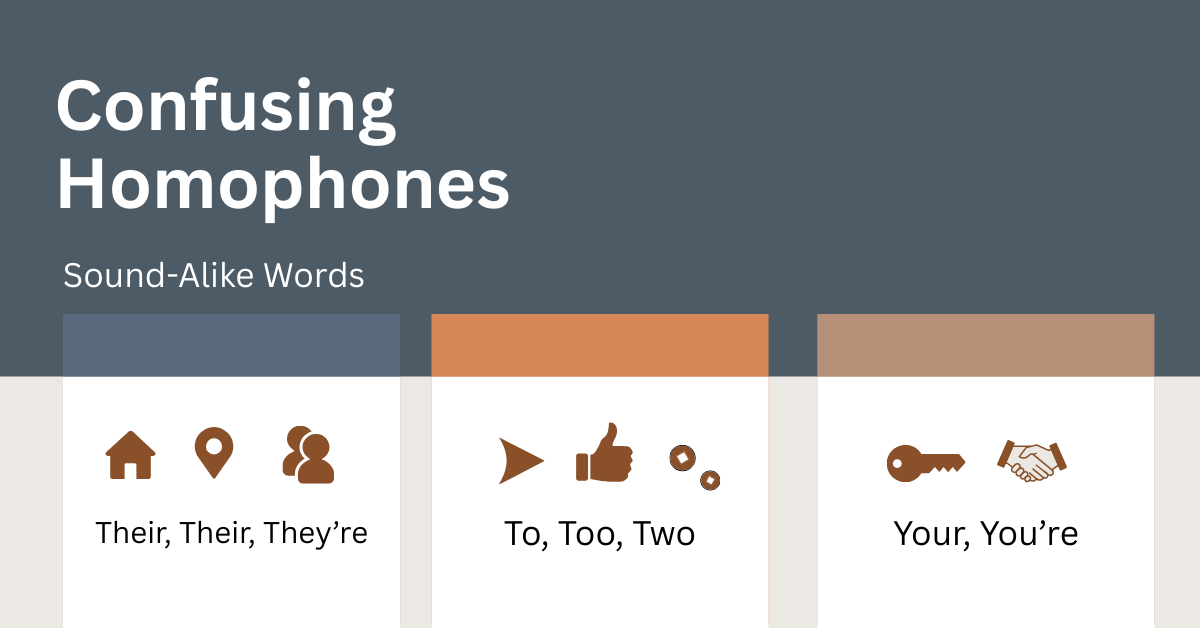
Learning English becomes difficult for beginners not because of grammar, but because of confusing homophones in English.
These are sound-alike words in English that:
- sound the same
- but have different spellings and meanings
As a result, learners often hear correctly but write incorrectly. For example:
- to / too / two
- their / there / they’re
- your / you’re
This is one of the biggest causes of common homophone mistakes in writing.
If your basics are weak, first understand English grammar basics to reduce confusion at the root.
In this guide, you’ll learn how to avoid mistakes by using simple patterns, what homophones are, why they confuse learners, and how to use them correctly.
What Are Homophones in English?
So, what are homophones for beginners?
Homophones are English words that sound the same but have different meanings and spellings.
Example:
- right / write
- meet / meat
The key issue is:
Beginners depend on sound, not spelling + meaning. This is why spoken vs written English becomes a major problem for learners.
Learn how grammar helps in identifying words using parts of speech, with an easy guide for beginners.
Why Do Sound-Alike Words Confuse Beginners
Understanding the problem helps you fix it faster. Most homophones in English confuse learners because:
- Beginners learn by listening first, not spelling
- English spelling is not phonetic. They do not match the pronunciation.
- Native language doesn’t have similar patterns.
- Fast and natural speech hides spelling differences.
This is why learners struggle with English words that sound the same but have different meanings.
Key Insight: Instead of memorizing words, focus on patterns and usage.
This approach is similar to learning word families in vocabulary, where one rule explains many words.
Most Common Confusing Homophone Pairs
Now let’s move from concept → application. Learn these sound-alike word pairs as groups.

Their, Their & They’re
Their → ownership (possessive adjective)
There → a place or. direction (adverb)
They’re → they are (contraction)
Example: Their bag is there. They’re late.

Your Vs. You’re
Your → ownership (possessive adjective)
You’re → you are (contraction)
Example: You’re right about your answer.
Its vs. It’s
Its → ownership (for things/animals, possessive pronoun)
It’s → it is / it has (contraction)
Example: It’s cold. The dog wagged its tail.
To, Too & Two
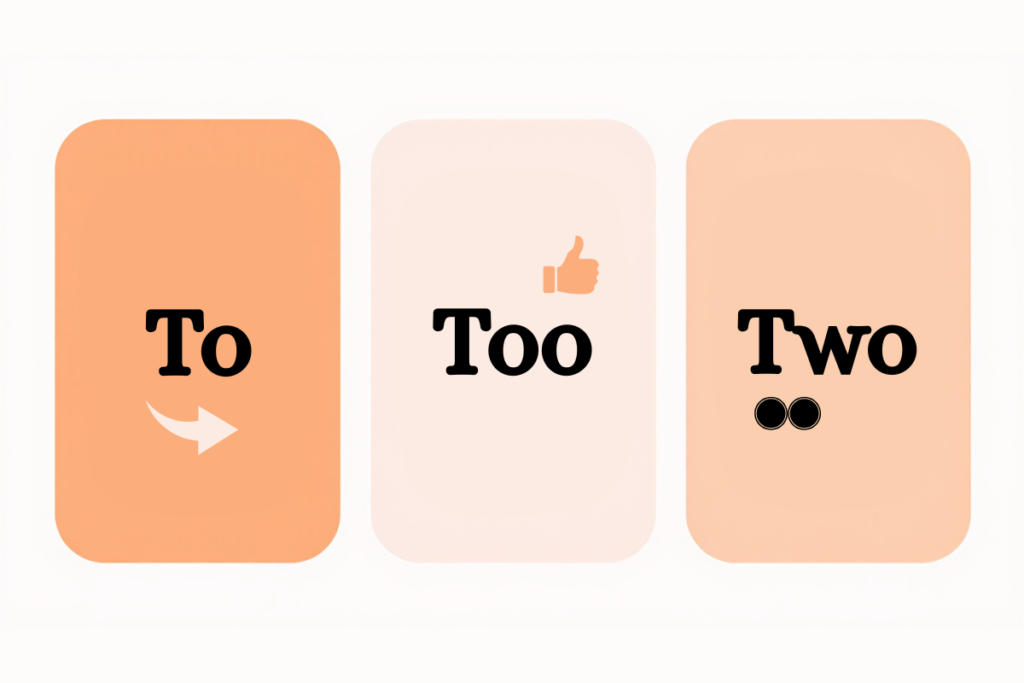
To → direction/purpose (preposition)
Too → also / extra (adverb)
Two → number 2 (number)
Example: I, too, want to buy two books.

Hear vs. Here
Hear → to listen (verb)
Here → this place (adverb)
Example: Come here. Can you hear me?

Buy, By, Or Bye
Buy → to purchase (verb)
By → near or beside (preposition)
Bye → goodbye (interjection)
Example: Buy it by Friday. Bye!

Know Vs. No
Know → to understand/recognize (verb)
No → negative /not any (determiner)
Example: I know the answer. No doubt.

Write Or Right
Write → put words on paper (verb)
Right → correct / direction (adjective)
Example: Write the right word.

Meet Vs. Meat
Meet → to come together (verb)
Meat → food from animals (noun)
Example: Let’s meet for meat curry.

Sea Or See
Sea → large body of water (noun)
See → to look/observe (verb)
Example: I see the sea.
Easy Memory Tricks for Confusing Homophones
Now the important part is how to remember them. Instead of memorizing, use patterns and clues.
Smart Memory Tricks
- Their contains heir → linked to ownership.
- There contains here → link to a place.
- You’re can be replaced with you are.
- It’s always expands to it is or it has.
These tricks help reduce common homophone mistakes quickly.
Improve long-term retention using active and passive vocabulary.
How to Avoid Mistakes with Homophones
Most errors happen because learners focus only on sound. To fix confusing English words, follow these habits:
- Read sentences aloud and check meaning
- Write separate examples for each word
- Learn homophones in groups
- Identify function (place, action, ownership)
This builds accuracy in English vocabulary practice.
Learning Strategy: Treat homophones like mini systems, not isolated words.
This method aligns with root words, prefixes, and suffixes, where patterns reduce memorization.
Advanced Tip (Important for Fast Learning)
Homophones become easier when you:
- Understand grammar roles.
- Recognize patterns.
- Connect meaning with structure.
This is why structured learning beats memorization.
Confusing homophones in English are not difficult—they are just misunderstood.
Once you:
- Focus on meaning
- Understand spelling patterns
- Practice usage
They become easy. Start with small groups, practice daily, and your accuracy will improve naturally.
Continue the series: the most common confusing words in English for beginners
Answers to your queries:
Words that sound the same but have different spellings and meanings.
Because English pronunciation often does not match spelling, especially in fast speech.
Their/There/They’re, Your/You’re, To/Too/Two are the most common.
By learning them in pairs, using memory tricks, and practicing with sentences.
Leave a Reply