
Learning English is exciting—but for many beginners, it quickly becomes frustrating. Not because of grammar rules. But because of the confusing words in English.
These are words that:
- sound the same
- look similar
- or have closely related meanings
As a result, learners often make mistakes even when they understand the basics.
For example:
- Their / There / They’re: Their house is big. The books are over there. They’re coming tomorrow.
- Your / You’re: Your bag is on the table. You’re doing a great job.
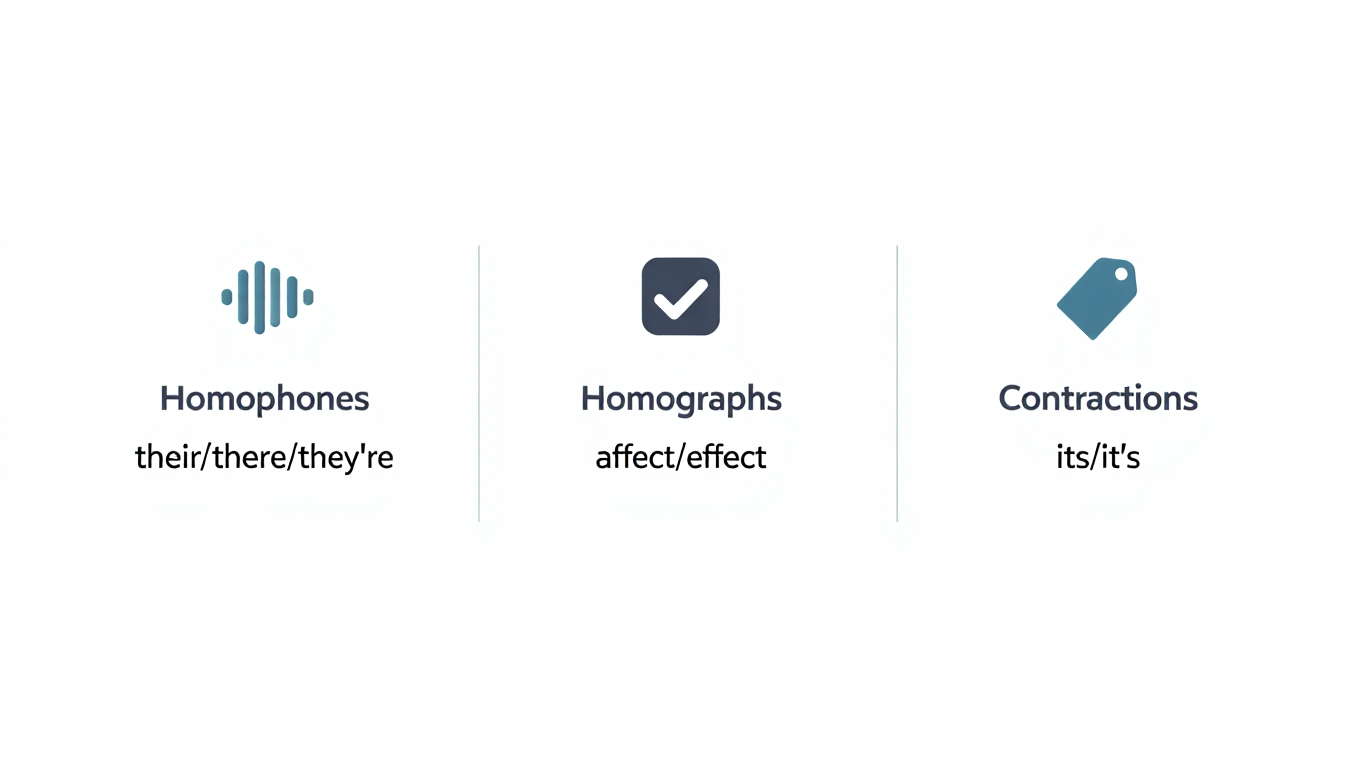
- Its / It’s: The cat licked its paw. It’s raining outside.
These small differences can completely change the meaning.
If your foundation feels weak, first understand English grammar basics to avoid deeper confusion.
In this guide, you’ll learn how to identify, group, and master confusing words—so you stop memorizing and start understanding patterns.
What Are Confusing Words in English?
So, what exactly are the confusing words in English?
They are words that sound alike, look similar, or have closely related meanings.
But they mean different things and are used differently.
The problem is not the words themselves—
The problem is not understanding their pattern.
Why Confusing Words Trouble Beginners
Most confusing English words fall into clear patterns. Once you understand these patterns, the confusion immediately reduces.
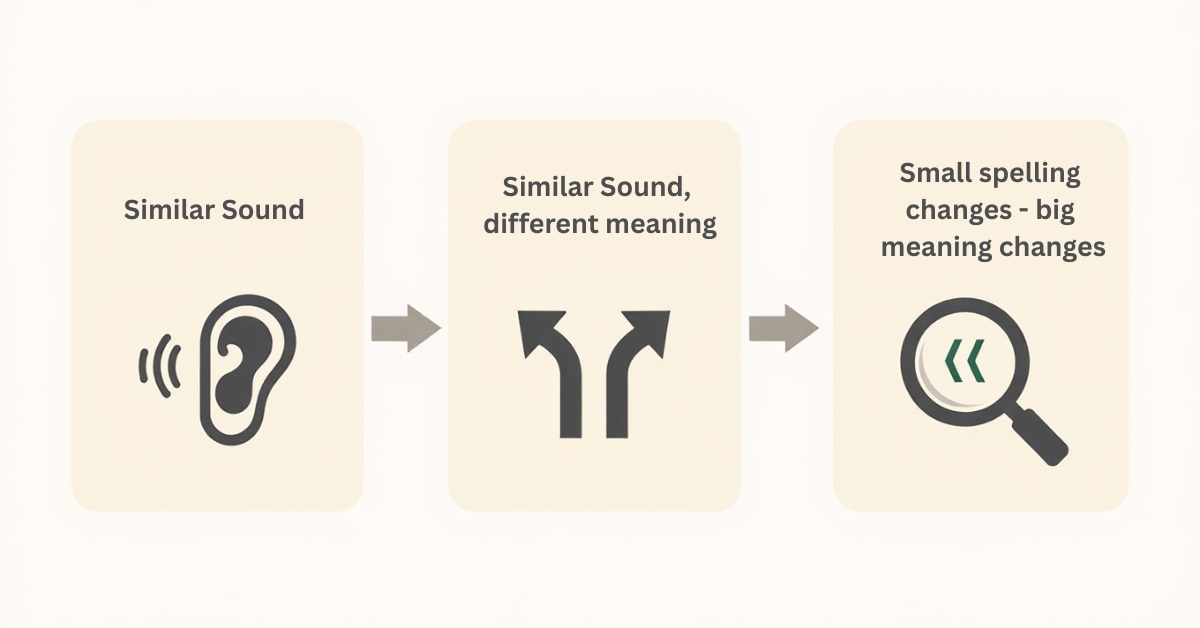
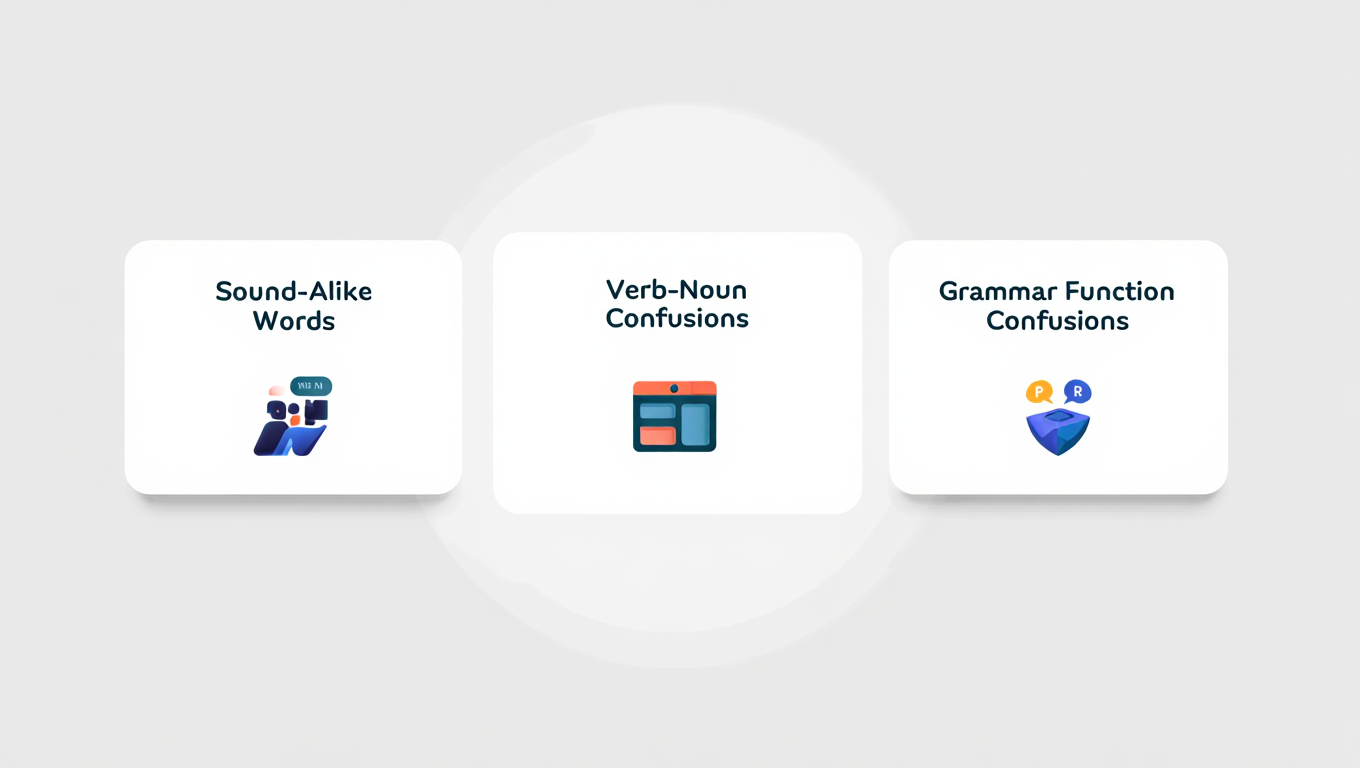
1. Sound-Alike Words (Homophones)
These words sound the same but have different meanings and spellings.
Examples:
- to / too / two
- their / there / they’re
Example sentences:
- I’m going to the park.
- I want to come too.
- I have two apples.
2. Similar-Looking Words (Verb–Noun Confusions)
These words look similar but function differently.
Examples:
- advice (noun) vs advise (verb)
- practice (noun) vs practise (verb)
Example sentences:
- She gave me good advice.
- I advise you to study.
3. Grammar Function Confusions
These depend on how words behave in a sentence (belong to different grammatical roles).
Examples:
- affect vs effect
- borrow vs lend
- accept vs except
- work (verb) vs work (noun)
Example sentences:
- This can affect your result.
- The effect is noticeable.
- I work every day.
- My work is very interesting.
Key Insight
Instead of memorizing words, think in patterns.
This is similar to learning word families in vocabulary, where one rule helps you understand many words.
Types of Confusing Words (Quick Overview)
| Word Group | Meaning | Examples |
|---|---|---|
| Sound‑Alike Words | Same sound, different spellings & meanings | their / there / they’re |
| Verb–Noun Confusions | Same root, different function | advice vs advise |
| Grammar Confusions | Meaning depends on usage | affect vs effect |

Start Learning by Group (Smart Method)
Here’s the mistake most beginners make:
They try to learn everything at once
You should learn one group at a time
Start with:
- Sound‑Alike Words in English for Beginners
- Verb–Noun Confusions in English for Beginners
- Grammar Function Confusions in English for Beginners
This structured approach reduces confusion and improves retention.
Tips to Learn Confusing Words Faster
Now let’s move from understanding → application.
1. Learn in Groups, Not Lists
Random memorization doesn’t work. Grouping helps you:
- see patterns,
- remember faster
2. Speak in Full Sentences
Speaking helps you understand context, not just meaning. This is especially important for homophones.
3. Use Active Vocabulary Practice
Don’t just read—use the words. To improve usage, study the active and passive vocabulary explained for beginners.
4. Use Visual Memory
Visual cues like charts, color-coded tables, or infographics. These make the differences clearer.
5. Connect Vocabulary with Structure
Many confusing words are actually grammar-based. You can strengthen this by learning the Parts of Speech Made Easy guide for beginners.
Common Mistakes Beginners Make
The table below shows common mistakes beginners make and the correct usage, helping you spot and fix errors easily.
| Mistake Type | Wrong | Correct |
|---|---|---|
| Homophone confusion | Its raining today. | It’s raining today. |
| Mixing verb and noun | I need your advise. | I need your advice. |
| Grammar-based confusion | This can effect you. | This can affect you. |
Critical Insight
Most mistakes happen because:
- learners guess
- learners memorize without understanding
The real solution is pattern recognition + usage practice
Build a Strong Foundation (Important Step)
If you’re still struggling, your issue may not be vocabulary—it may be structure.
You should strengthen:
- Basics of English grammar to avoid common mistakes.
- Nouns Guide to reduce confusing word errors.
- Learn verbs clearly.
These directly reduce confusion in word usage.
Advanced Learning Tip
Confusing words become easier when you understand word formation.
👉 Study root words, prefixes, and suffixes to:
- Recognize patterns
- Decode unfamiliar words
- Expand vocabulary faster
Wrapping Up & What to Do Next
Confusing words in English are not difficult—they are just misunderstood.
Once you:
- learn patterns
- practice usage
- connect vocabulary with grammar
They become easy.
Next step: Start with the first group — Sound‑Alike Words and practice daily.
Leave a Reply