
English beginners often struggle with words that look similar but perform different functions. Some words act as verbs, while their closely related forms act as nouns, which confuses writing and speaking.
In this guide, we’ll explore common verb–noun confusing words for beginners, explain their meanings, and show how to use them correctly with simple examples. By the end, these mistakes will feel much easier to fix.
common verb–noun confusing word pairs include: Advise (verb) /Advice (noun, Choose (verb) /Choice (noun), Lose (verb) /Loss (noun), Believe (verb) /Belief (noun)
What Are Verb–Noun Confusing Words?
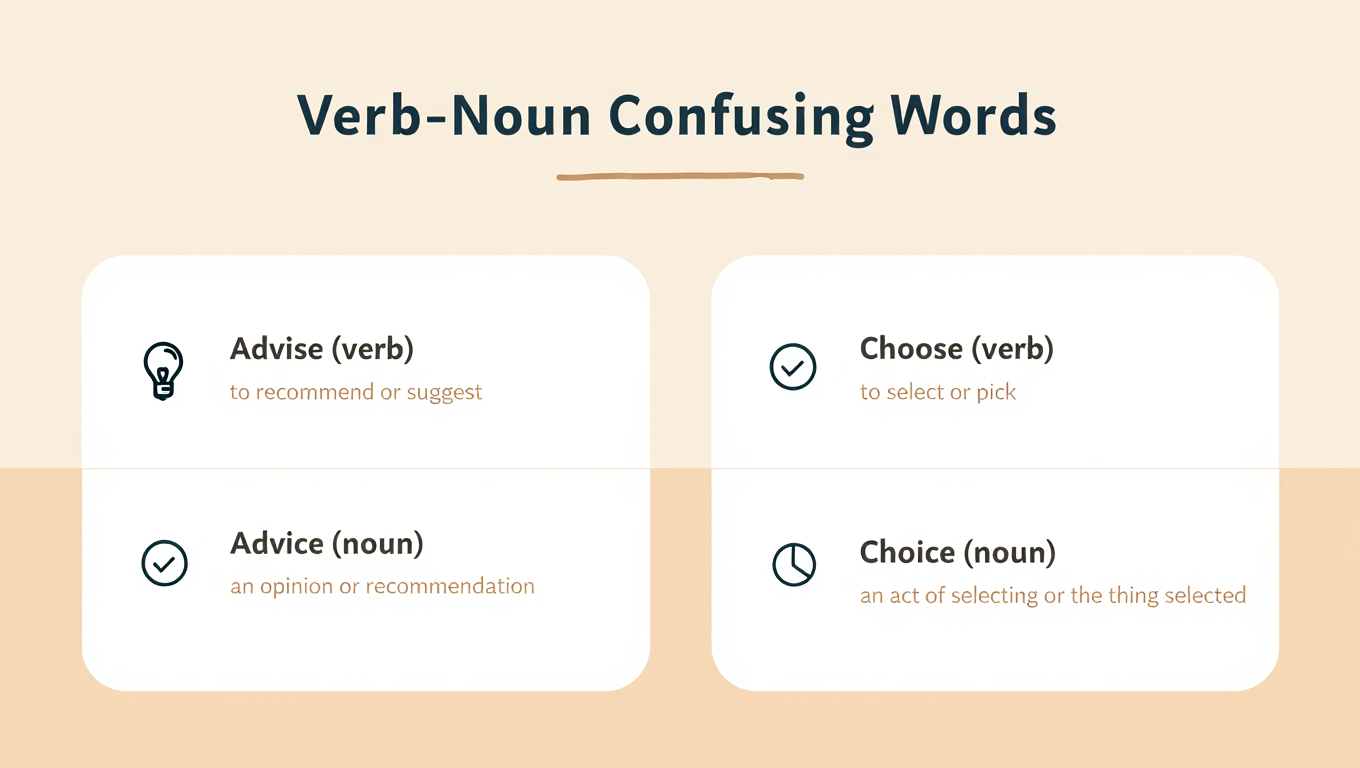
Verb-noun confusion in English happens when two related words look or sound similar but perform different jobs in a sentence.
- A verb shows action
- A noun names an idea, thing, or result
Think of it like this: A verb does the work. A noun receives the result. Here are example sentences:
- She advised me to study regularly, and her advice was helpful.
- Daily practice improves skills, so she practises English every morning.
- Stress can affect your health, and the effect may last for days.
If this concept feels unclear, you may want to revisit ‘what is grammar in English‘ and ‘parts of speech made easy‘ before moving ahead.
Common Verb–Noun Confusing Words
Below is a list of practical verb-noun confusing words that beginners often mix up.

Advise Vs. Advice
Advise → to give suggestions (verb)
Advice → a suggestion (noun)
- She advised me to rest.
- Her advice was very helpful.
Affect Or Effect
Affect → to influence something (verb)
Effect → the result or outcome (noun)
- Lack of sleep affects your health.
- The effect of exercise is positive.
Practice vs. Practise
Practice → the act of doing something repeatedly (noun)
Practise → to do or perform repeatedly (verb)
- Daily practice improves skills.
- She practises speaking English.
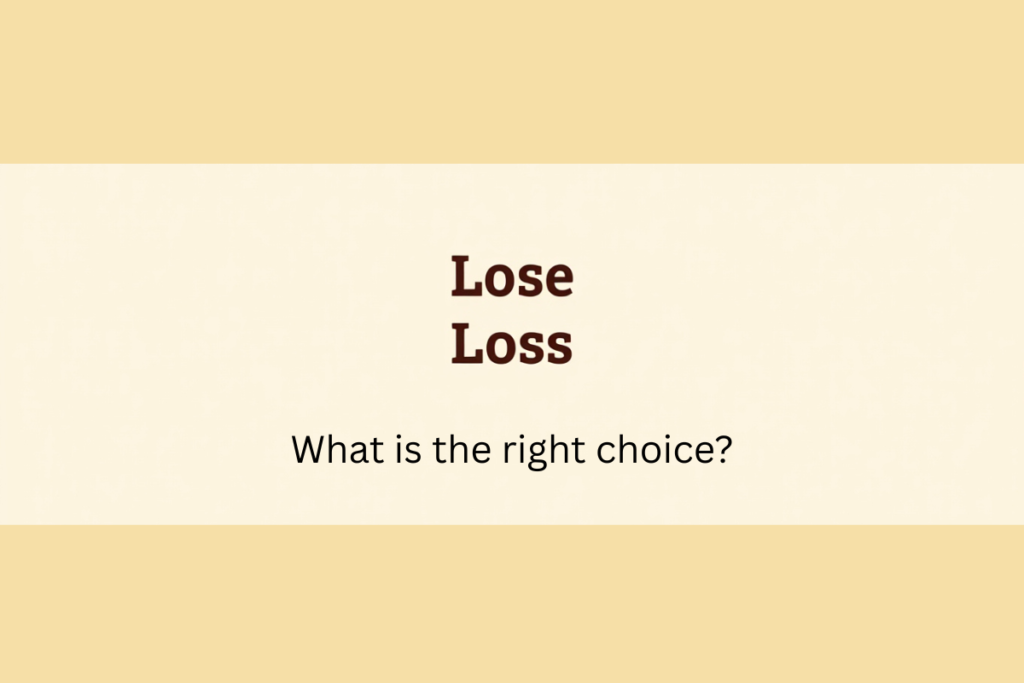
Lose Or Loss
Lose → to fail to keep or win (verb)
Loss → the act or result of losing (noun)
- Be careful not to lose your phone.
- The loss of data was serious.

Choose vs. Choice
Choose → to select something (verb)
Choice → the option selected (noun)
- You can choose any topic.
- This book is a good choice.

Believe Or Belief
Believe → to accept as true (verb)
Belief → something you accept as true (noun)
- I believe in hard work.
- Honesty is my core belief.
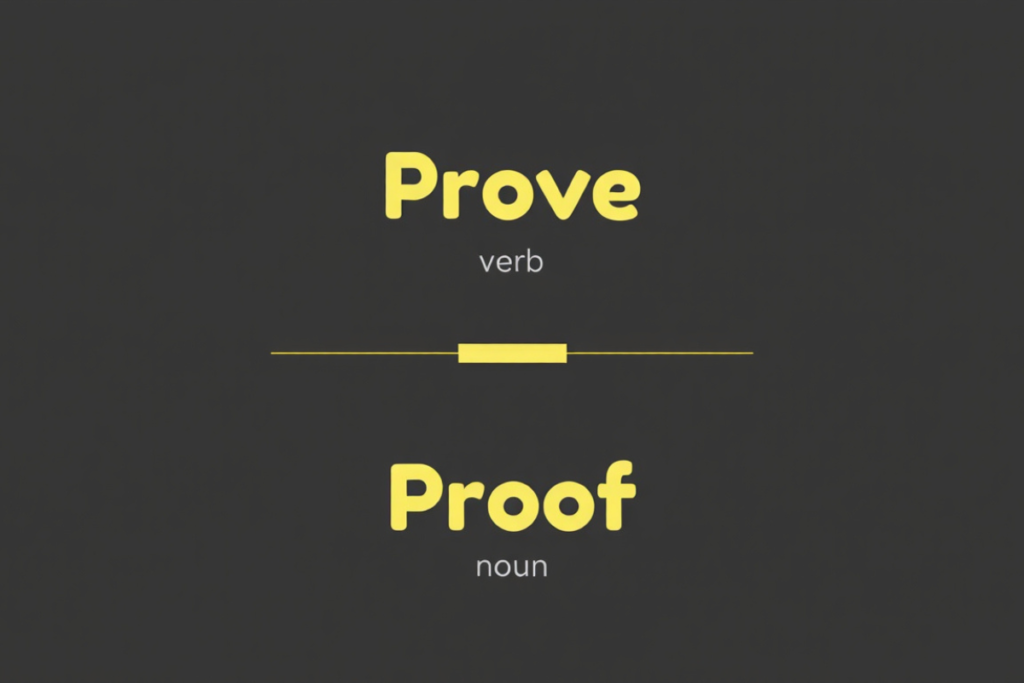
Prove vs. Proof
Prove → to show something is true (verb)
Proof → evidence that something is true (noun)
- Can you prove your point?
- There is no proof of his claim.
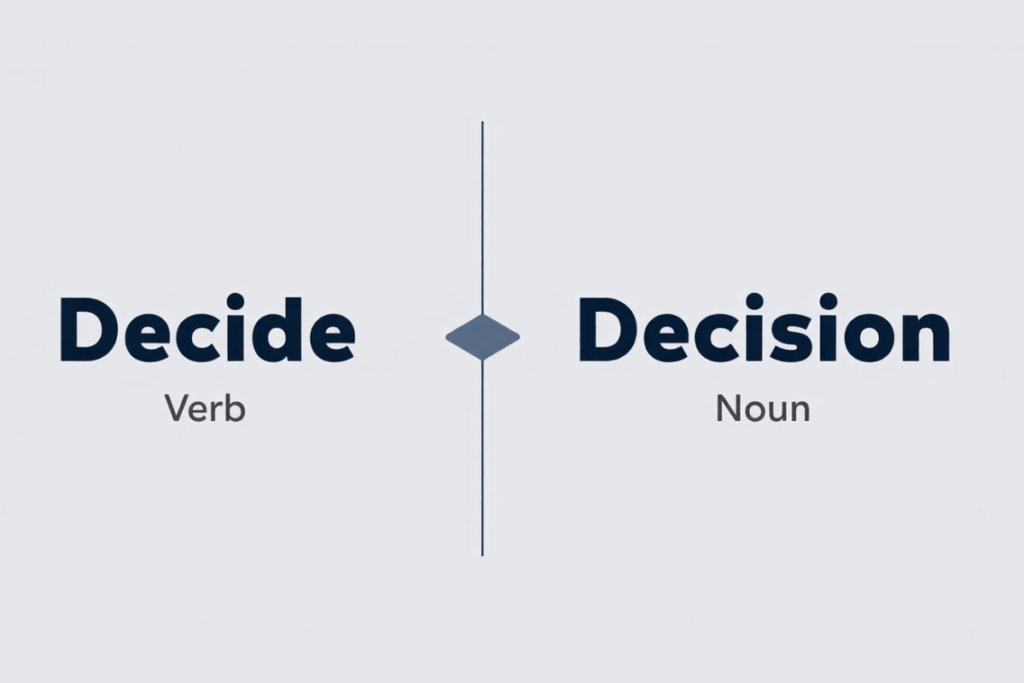
Decide Vs. Decision
Decide → to make a choice (verb)
Decision → a choice that is made (noun)
- Please decide quickly.
- Her decision surprised everyone.
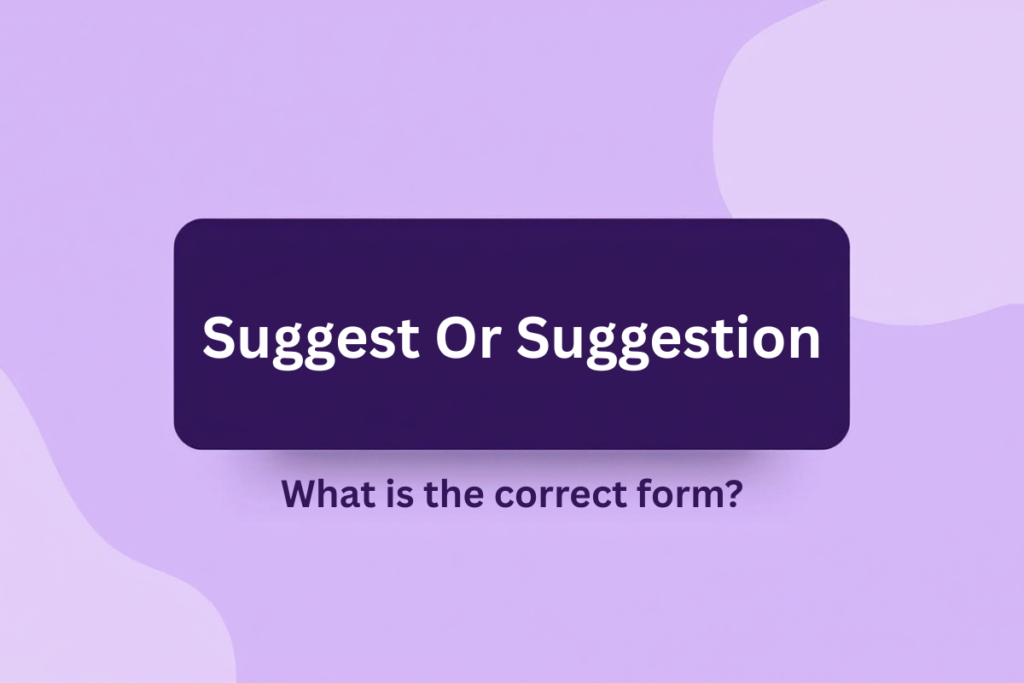
Suggest Or Suggestion
Suggest → to put forward an idea (verb)
Suggestion → an idea or proposal (noun)
- I suggest taking a break.
- That is a helpful suggestion.
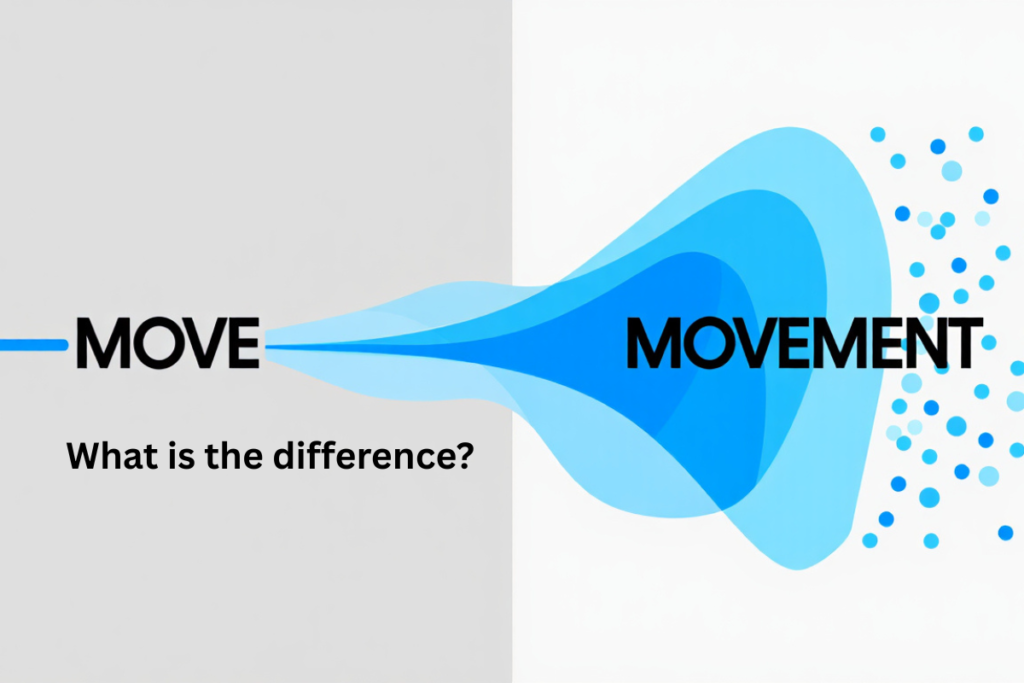
Move Vs. Movement
Suggest → to put forward an idea (verb)
Suggestion → an idea or proposal (noun)
- I suggest taking a break.
- That is a helpful suggestion.
Why Do Beginners Confuse Verbs and Nouns?
English vocabulary grows in patterns, not isolated words. Many learners memorize words individually. But fluent speakers learn systems.
This is why understanding English grammar basics, noun and verb usage, and the grammar mistakes beginners make is crucial.
You can strengthen this foundation by revisiting:
How to Avoid Verb–Noun Confusion
Here are unique strategies rarely mentioned:
1. Use the “Action Test.” Ask yourself: Is something happening? If yes, it’s likely a verb.
2. Replace the Word. Try replacing the word. If it fits, you’ve found your answer.
- “do” → verb
- “thing” → noun
3. Build Active and Passive Awareness: Words behave differently in active and passive vocabulary. Learn more here: active and passive vocabulary explained.
Related Confusing Word Guides
To expand learning, follow the associated guides on confusing words here:
Mastering common verb-noun confusing words for beginners takes time, not talent. Focus on patterns. Practice with context. Always check whether a word indicates action or result.
Once you understand these verb-noun confusing words, your writing becomes clearer, stronger, and more confident.
Keep learning. Keep practicing. Confusion fades with clarity.
FAQs: Confusing Verb-Noun Words
They are words that look or sound similar, but one is a verb (action) and the other a noun (idea or result), like advise and advice.
They often share the same root and spelling, making it hard to tell which is a verb or a noun.
A verb shows action; a noun names a thing, idea, or result.
Some common pairs are advise/advice, affect/effect, practice/practise, choose/choice, lose/loss.
Practice common pairs, check if the word shows action or result, and review basic grammar rules.
Leave a Reply