
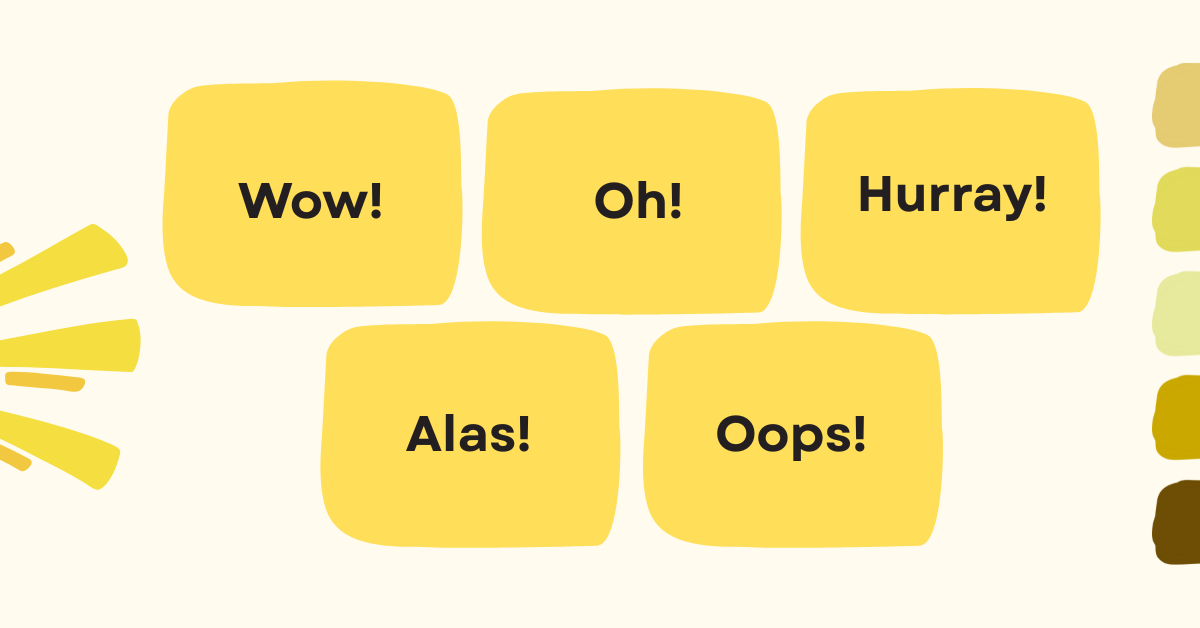
Have you ever said “Wow!” when surprised or “Ouch!” when hurt? These small words are called interjections in English grammar.
If you are wondering ‘what are interjections’, they are words that help us express emotions in English quickly and naturally.
Think of interjections as emojis of spoken language. 😊
They instantly show feelings and reactions without long explanations.
This guide explores the definition, types, and easy examples of interjections. Perfect for beginners!
What Are Interjections in English Grammar?
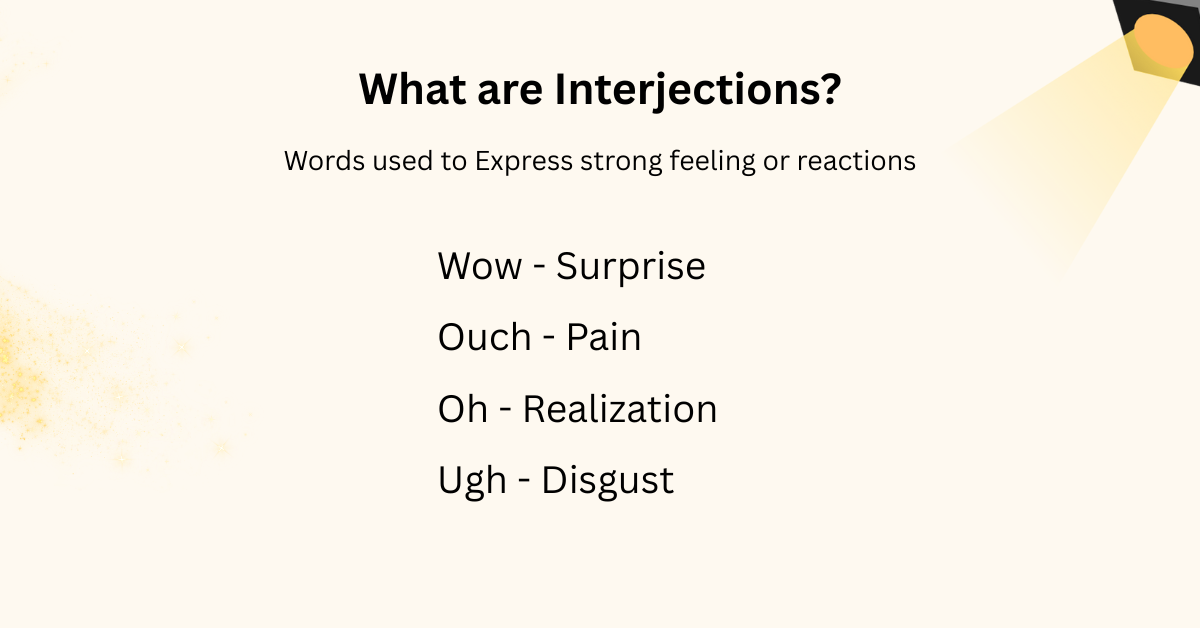
The definition of interjections is simple:
Interjections, also known as sudden emotion words, are words or phrases used to show sudden emotions, reactions, or responses. They differ from nouns (name things), verbs (show action), or adjectives (describe).
Interjections include ‘greetings, pain, or excitement, attention, or surprise.’ Picture a fireworks show—interjections are the bangs!
In grammar terms, interjections are a part of speech category. They do not depend on sentence structure. They often stand alone. Basic interjection examples include:
- Wow! (surprise)
- Oh! (realization)
- Oops! (mistake)
- Ouch! (Pain)
Types of Interjections With Examples
There are several types of interjections with examples. Each type serves a different purpose and helps express emotions, thoughts, or reactions more clearly.
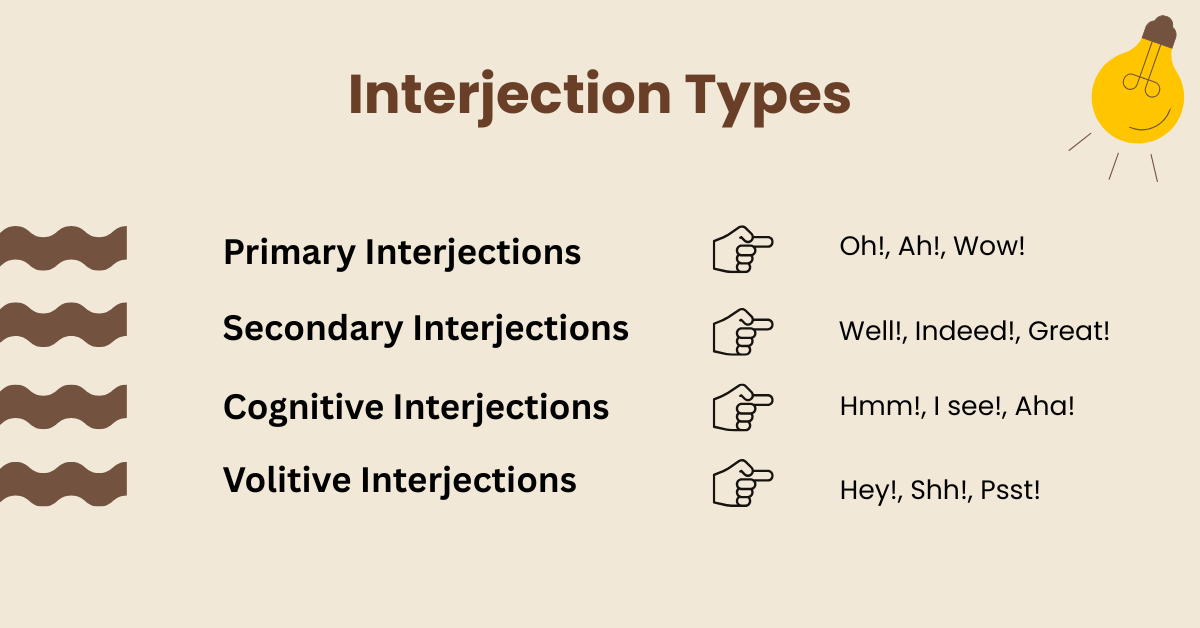
Primary Interjections
Primary interjections like “Oh!”, “Ah!”, “Wow!” exists only as exclamations. These words are used to express sudden emotions such as surprise, happiness, or pain.
- Wow! That painting is beautiful. (shows surprise and admiration)
Secondary Interjections
Secondary interjections borrow or come from other word classes, like nouns or adverbs: Well! (hesitation), Indeed! (agreement), Great! (approval).
- Well! I didn’t expect that answer. (shows mild surprise or thinking)
Cognitive Interjections
Cognitive interjections are used to show thinking, understanding, or realization.
They often appear when someone suddenly understands something or is processing information: Aha! (insight), Hmm! (contemplation), I see! (comprehension)
- Hmm, now I understand the problem. (shows thinking or realization)
Volitive Interjections
Volitive interjections are used to express commands, requests, wishes, or calls for attention. They often encourage someone to act or respond: Shh! (quiet), Psst! (attention), Hey! (greet), Hush! (silence)
- Hey! Please listen to me. (used to get attention)
Interjections List with Meanings & Examples
Below is a quick list with examples of sentences using common interjections and their meanings. These are popular informal English expressions.
| Interjection | Meaning / Feeling | Example Sentence |
|---|---|---|
| Wow | surprise/admiration | Wow! That view is amazing. |
| Ouch | Pain | Ouch! That hurts. |
| Oh | Realization | Oh, I understand now. |
| Hey | Attention | Hey! Listen to me. |
| Alas | sadness/regret | Alas! We lost the match. |
| Ah | Joy/celebration | Ah, this tea tastes good. |
| Oops | Mistake | Oops! I dropped my phone. |
| Hurray | happiness/excitement | Hurray! We won the game. |
| Hmm | Thinking / doubt | Hmm, let me think about it. |
| Yay | Happiness | Yay! It’s my birthday today. |
| Ugh | disgust/annoyance | Ugh! This smells terrible. |
| Oh no | Fear / worry | Oh no! I forgot my wallet. |
| Bravo | praise/admiration | Bravo! That was a great performance. |
| Phew | Relief | Phew! The exam is finally over. |
| Eh | Uncertainty / question | Surprise/admiration |
How to Use Interjections in Sentences
Many learners ask how to use interjections in English sentences. The rule is simple.
Interjections usually appear:
- At the beginning: “Wow, that movie was great!”
- Alone as a reaction: “Oh! I forgot my keys.”
So, these are the two positions of interjections, common in conversation
Punctuation With Interjections
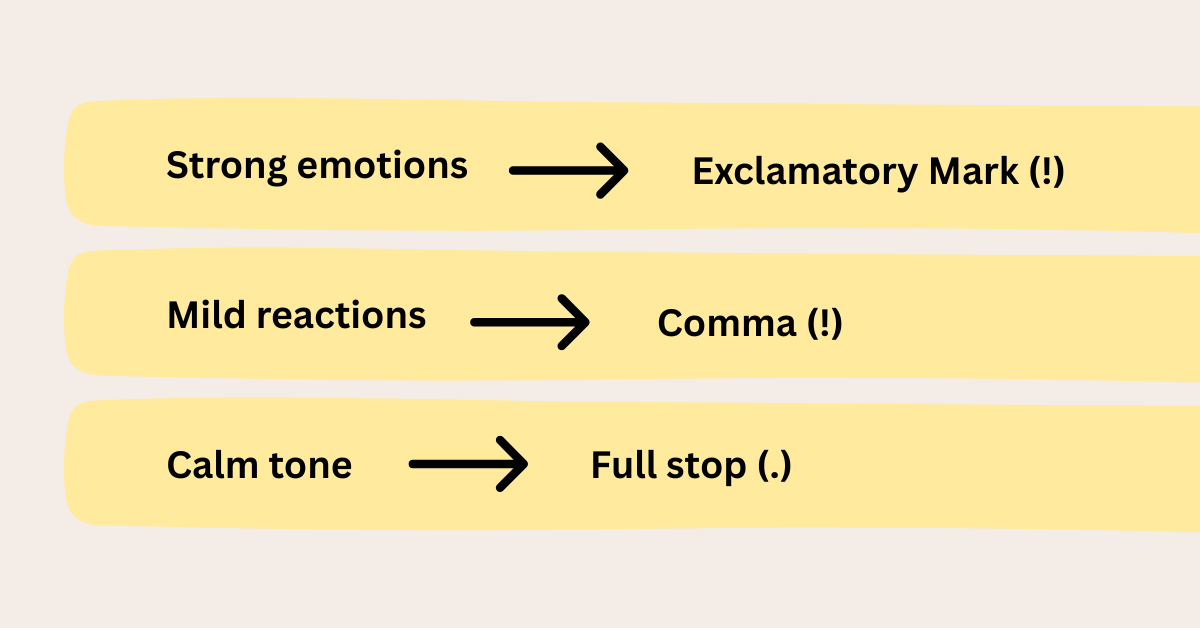
Correct punctuation matters. Understanding punctuation with interjections improves clarity.
Common rules with interjections and punctuation examples:
- Use (!) for strong emotions → Wow!
- Use (,) for mild reactions → Well, I agree.
- Use (.) for calm tone → Oh. That’s fine.
Interjections in English grammar make chats pop. Practice easy examples of interjections daily. Notice interjections in everyday sentences!
Express emotions in English freely. Share your “Wow!” stories in the comment section below.
FAQs: Interjections
In simple words, interjections are Emotional words!
They make speech natural and emotional.
Wow, Oh, Ouch, Hey, Alas.
Primary Interjections, secondary Interjections, cognitive interjections, and volitive interjections.
Leave a Reply