
Conjunctions may seem small, but they play a big role in English Grammar. From joining words like ‘and‘ or ‘but‘ to connecting full sentences with ‘because‘ or ‘although‘, conjunctions are everywhere.
They are an important part of Parts of Speech, helping you say, “I like tea and coffee,” or “I stayed home because it rained,” joining thoughts naturally. Without them, our sentences would be short, abrupt, and confusing.
In this simple conjunctions guide, we will cover types of conjunctions, provide easy examples, and give tips for conjunctions for beginners.
What Are Conjunctions in English Grammar
Conjunctions mean “to join together.” They are linking words that connect phrases, clauses, and ideas.
These words help show relationships between ideas, such as cause and effect, contrast, choice, or addition. By using conjunctions, you can combine simple sentences into complex, meaningful ones, making your writing more interesting and professional.
Examples of Conjunctions in Action
- Addition:
- I like tea, and she likes coffee.
(joins two ideas of equal importance.)
- I like tea, and she likes coffee.
- Contrast:
- I wanted to go to the park, but it started raining.
(Contrast between two ideas.)
- I wanted to go to the park, but it started raining.
- Cause and Effect:
- He stayed home because he was feeling sick.
(Why something happened.)
- He stayed home because he was feeling sick.
- Choice / Alternative:
- You can have tea or coffee.
(Gives the reader two alternatives.)
- You can have tea or coffee.
Types of Conjunctions
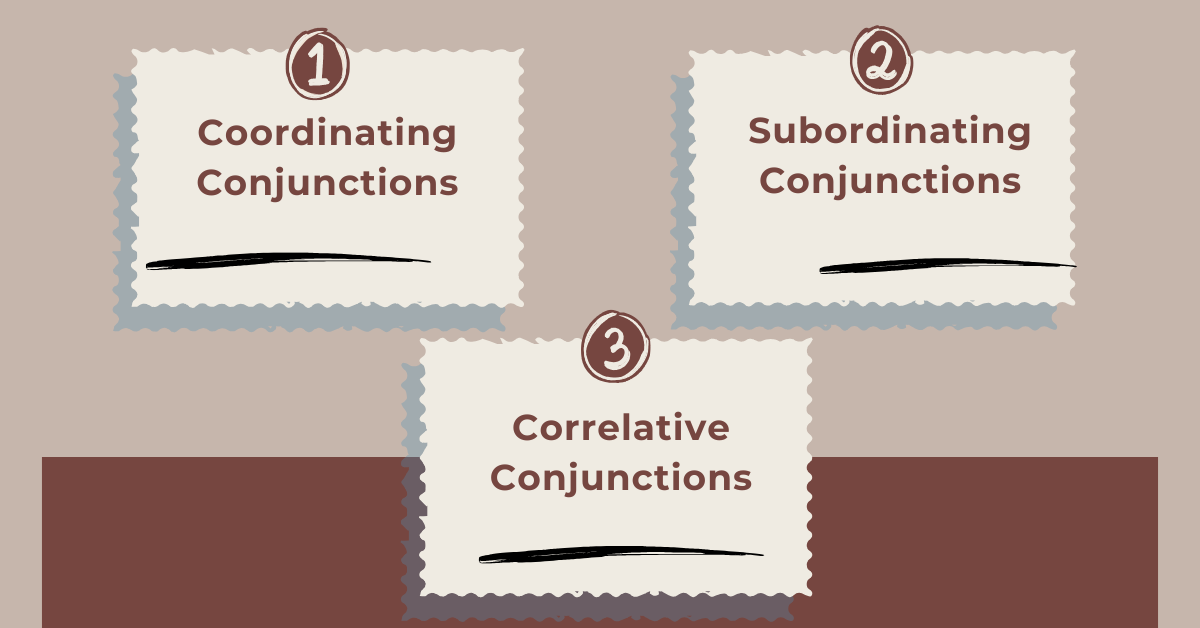
Types of conjunctions fall into three basic categories: coordinating conjunctions, subordinating conjunctions, and correlative conjunctions.
| Type | Function | Example |
|---|---|---|
| Coordinating | Connect equal sentence parts | and, but, or |
| Subordinating | Connect dependent and independent clauses | because, although, while |
| Correlative | Paired conjunctions linking balanced ideas | either…or, neither…nor |
Coordinating Conjunctions
Coordinating conjunctions are words that connect two or more ideas of equal importance. They are used to join independent clauses, words, or phrases in a sentence.
The FANBOYS mnemonic (memory aid — a tool, trick, or pattern) helps you remember the seven coordinating conjunctions:
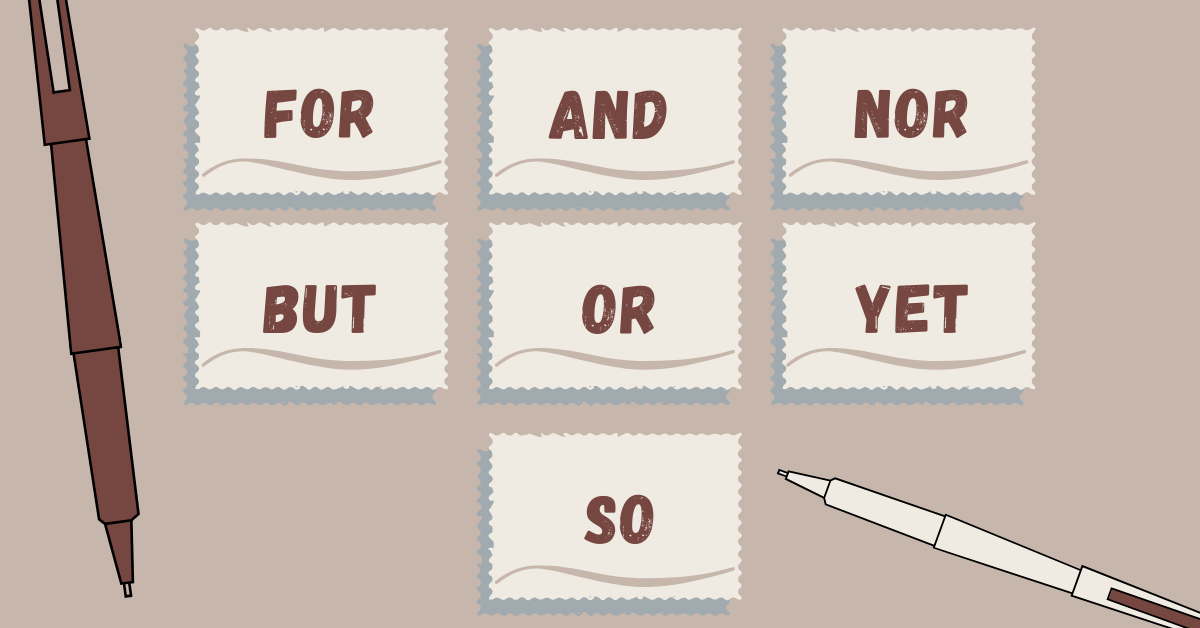
F – For (reason)
A – And (addition)
N – Nor (negation/alternative)
B – But (contrast)
O – Or (choice/alternative)
Y – Yet (contrast, similar to but)
S – So (result/effect)
- I like tea, and she likes coffee.
- He wanted to go to the park, but it started raining.
- You can take the bus, or you can walk.
Tips for Beginners
- Always use a comma before FANBOYS when connecting full sentences.
- Don’t overuse one conjunction repeatedly; mix them for better flow.
- Remember: coordinating conjunctions connect ideas of equal importance—use subordinating conjunctions for unequal ideas.
Subordinating Conjunctions
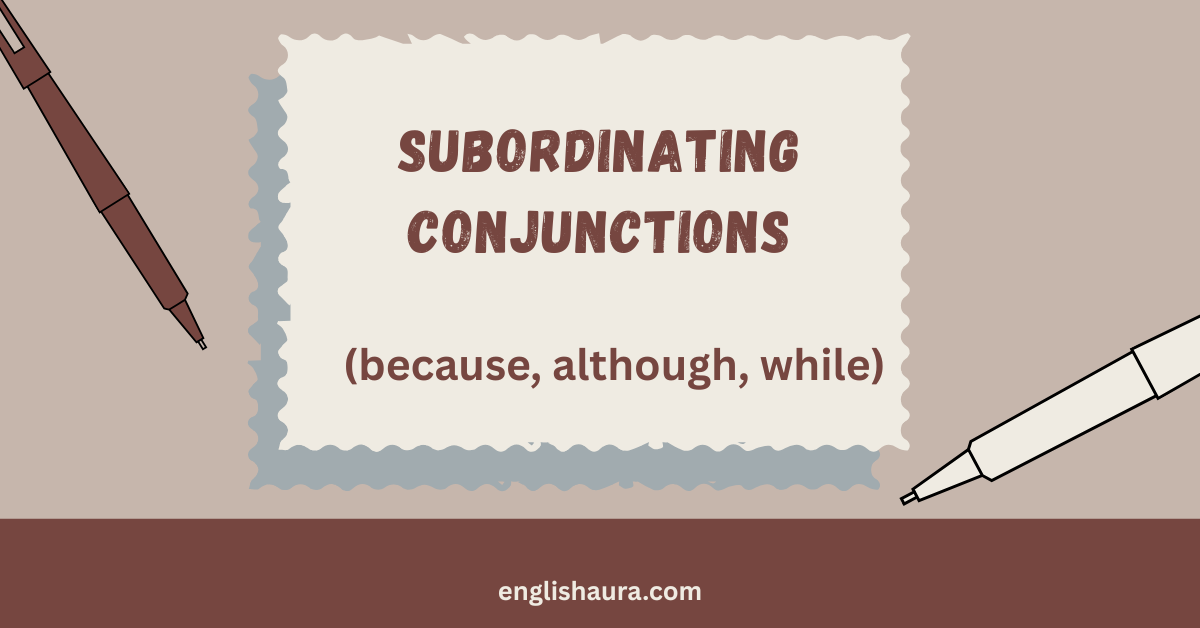
Subordinating conjunctions are words that connect a dependent clause (a clause that cannot stand alone) to an independent clause (a complete sentence).
They show relationships between ideas, such as cause, contrast, time, condition, purpose, or place. These include: because, although, while, since, if, unless, etc.
- I stayed home because it rained.
- Although he was tired, he finished his homework.
- You will succeed if you practice daily.
Correlative Conjunctions
Correlative conjunctions are pairs of words that work together to link balanced ideas in a sentence. Each part of the pair connects equally important sentence elements, such as words, phrases, or clauses.
They help make your writing clear, professional, and well-structured. These include: either…or, neither…nor, both…and, not only…but also
- Either you start now, or you will be late.
- Neither the teacher nor the students were ready.
- She is both smart and hardworking.
Think of them as teamwork: one word can’t function without its pair.
Mastering simple conjunctions is a key step in improving your writing. By understanding the types of conjunctions—coordinating, subordinating, and correlative—you can link ideas clearly, create smoother sentences, and make your writing more professional.
FAQs: Simple Conjunctions Guide
Coordinating, subordinating, and correlative are the three basic types of conjunctions.
F – For, A – And, N – Nor, B – But, O – Or, Y – Yet, S – So.
And connects similar or additional ideas, while But shows contrast or an opposing idea in a sentence.
1. Use coordinating conjunctions for equal ideas.
2. Use subordinating conjunctions for dependent ideas.
3. Use correlative conjunctions for paired ideas.
Leave a Reply