
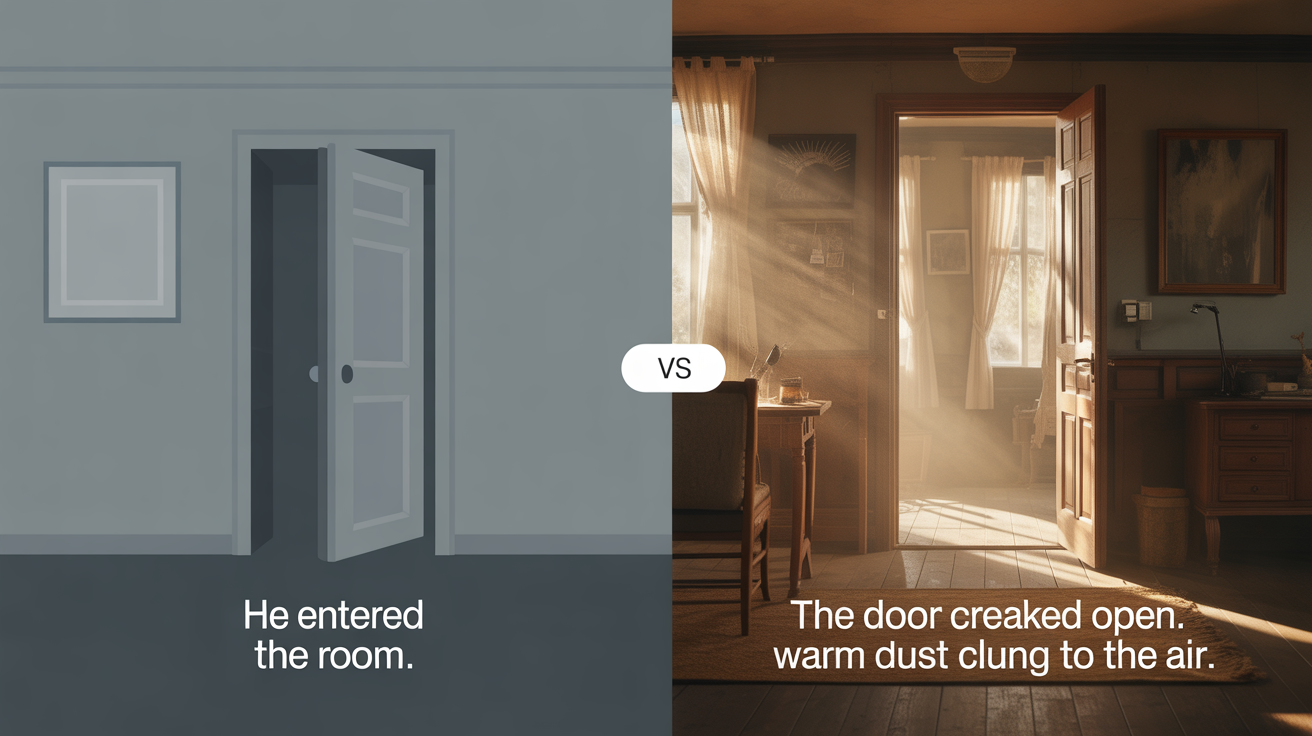
Flat scenes kill reader interest—fix them fast with sensory words.” Follow with one vivid before and after example. Readers don’t remember plots as much as they remember how a scene made them feel.
Before (flat): He entered the room. It was quiet.
After (sensory): The door creaked open. Warm dust clung to the air. A ceiling fan hummed like a tired insect.
The second version works because it uses sensory language poetry examples—sound, touch, and atmosphere. That’s the power of sensory words to make your scenes more immersive.
If your scenes sound correct but feel empty, the problem isn’t grammar. It’s missing sensory detail.
In this guide, you’ll learn how to use sensory words for vivid scenes and simple immersive writing techniques—with examples, poetry tips, and a free cheat sheet.
The 5 Senses That Make Scenes Come Alive
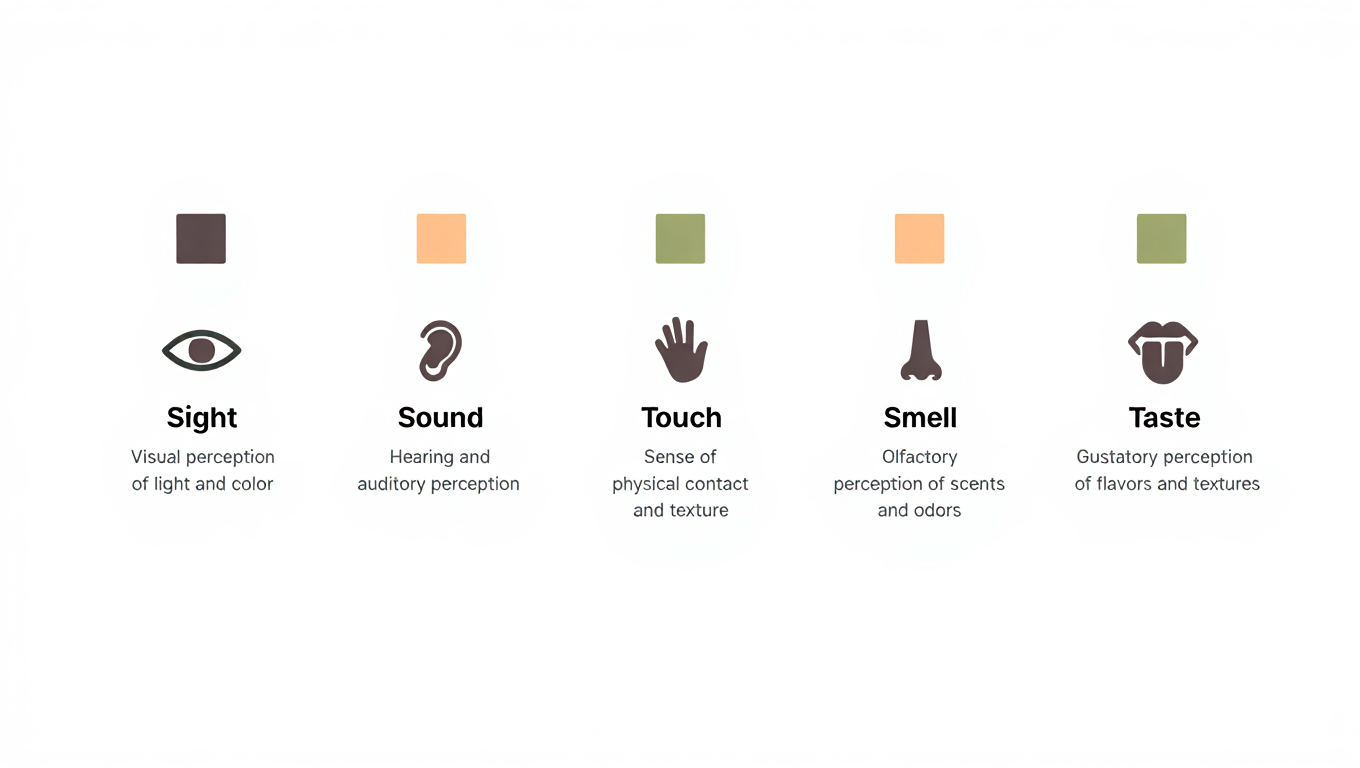
Strong scenes don’t describe everything. They choose the right senses at the right moment.
Below are 150+ sensory words grouped by sense. Use them naturally—never as a list inside your prose.
Sight — Visual Sensory Words (30+)
Visual sensory words create vivid imagery that pulls readers into scenes. It is highly important in creative writing and poetry.
| Visual Sensory Words | Effect | Example Sentences |
|---|---|---|
| Glistening | Reflects light | Sweat glistened on her skin. |
| Shadow-soaked | Dark, moody | The alley was shadow-soaked. |
| Sun-bleached | Worn, faded | Bones lay sun-bleached. |
| Flickering | Unstable | Candlelight flickered wildly. |
| Dust-coated | Old, abandoned | Books sat dust-coated. |
| Blurred | Confusion | Faces blurred in the rain. |
| Glimmering | Hope | Stars glimmered faintly. |
| Murky | Mystery | Water turned murky. |
| Jagged | Harshness | Rocks rose jagged. |
| Dappled | Soft light | Sunlight dappled the path. |
| Grim-streaked | Neglect | Walls were grim-streaked. |
| Luminous | Bright focus | Moon glowed luminous. |
| Tarnished | Decay | Silver turned tarnished. |
| Opalescent | Dreamlike | Shells shone opalescent. |
| Smudged | Careless | Windows sat smudged. |
| Stark | Emotional coldness | Stark shadows fell. |
| Gloom-filled | Fear | Room was gloom-filled. |
| Washed-out | Lifeless | Colors looked washed-out. |
| Vibrant | Energy | Flowers bloomed vibrant. |
| Faded | Nostalgia | Photos grew faded. |
| Dim | Silence | Lights dimmed slowly. |
| Glittering | Celebration | Lights glittered brightly. |
| Pale | Weakness | Face turned pale. |
| Ink-dark | Night | Sky was ink-dark. |
| Golden-hued | Warmth | Leaves glowed golden-hued. |
| Shattered | Chaos | Glass lay shattered. |
| Glossy | Newness | Magazine covers shone glossy. |
| Mist-veiled | Distance | Mountains stood mist-veiled. |
| Blazing | Intensity | Sun blazed overhead. |
| Cracked | Age | Earth cracked dry. |
Tip: Pair sight with one other sense for balance.
Sound — Auditory Sensory Words (30+)
Immerse readers using immersive writing techniques like auditory sensory words to bring scenes alive with sound.
| Auditory Sensory Words | Example Sentences |
|---|---|
| Crackling | Leaves crackled under her feet. |
| Murmuring | The stream murmured softly. |
| Buzzing | Bees buzzed around the flowers. |
| Echoing | His voice echoed in the cave. |
| Hollow | Footsteps sounded hollow. |
| Tinny | Music played tinny from the radio. |
| Clattering | Dishes clattered in the sink. |
| Rustling | Wind rustled the curtains. |
| Thudding | Heart thudded in his chest. |
| Whisper-thin | Her whisper-thin voice faded. |
| Shrill | The whistle blew shrill. |
| Droning | Planes droned overhead. |
| Muffled | Voices came muffled through the door. |
| Rhythmic | Waves beat rhythmic on the shore. |
| Rattling | Windows rattled in the storm. |
| Shriek | She let out a shriek. |
| Humming | The fridge hummed quietly. |
| Scraping | Chairs scraped across the floor. |
| Booming | Thunder boomed loudly. |
| Snapping | Twigs snapped underfoot. |
| Chirring | Crickets chirred at night. |
| Sighing | Wind sighed through the trees. |
| Gurgling | Water gurgled down the drain. |
| Pounding | Rain pounded the roof. |
| Squeaking | Door squeaked open. |
| Fizzing | Soda fizzed in the glass. |
| Clanging | Bells clanged in the tower. |
| Trembling | Voice trembled with fear. |
| Hissing | Cat hissed at the dog. |
Touch — Tactile Sensory Words (30+)
Incorporate touch words in creative writing to bring textures and sensations vividly to life.
| Tactile Sensory Words | Example Sentences |
|---|---|
| Gritty | Sand felt gritty underfoot. |
| Velvety | The rose was velvety soft. |
| Clammy | His hands were clammy with fear. |
| Scalding | She touched scalding steam. |
| Prickling | Goosebumps prickling her skin. |
| Icy | Icy wind chilled her fingers. |
| Slick | The road was slick with rain. |
| Rough-edged | Rough-edged rocks cut deeply. |
| Trembling | Leaves trembling in breeze. |
| Brittle | Brittle ice cracked easily. |
| Heavy | Heavy blanket weighed her down. |
| Feathery | Feathery wings brushed lightly. |
| Coarse | Coarse rope burned his palms. |
| Sticky | Sticky gum clung to her shoe. |
| Numb | Her fingers felt numb cold. |
| Burning | Burning coals scorched his skin. |
| Stiff | Stiff muscles ached after run. |
| Soaked | Clothes soaked through instantly. |
| Leathery | Leathery skin wrinkled deeply. |
| Swollen | Swollen ankle throbbed painfully. |
| Pulsing | Pulsing vein beat rapidly. |
| Aching | Aching joints slowed her steps. |
| Raw | Raw wound stung in air. |
| Crusted | Crusted snow crunched loudly. |
| Chilled | Chilled metal froze her touch. |
| Jagged | Jagged edge tore the fabric. |
| Warm | Warm fur comforted the kitten. |
| Bruised | Bruised knee turned purple. |
| Taut | Taut rope strained tightly. |
| Slippery | Slippery fish wriggled free. |
Touch creates instant physical realism.
Smell — Olfactory Sensory Words (30+)
Olfactory words in creative writing evoke powerful scents that transport readers into immersive scenes.
| Olfactory Sensory Words | Example Sentences |
|---|---|
| Musty | The musty attic smelled forgotten. |
| Incense-thick | Incense-thick smoke filled the room. |
| Rain-soaked | Rain-soaked earth released freshness. |
| Metallic | Blood had a metallic tang. |
| Charred | Charred wood smoked heavily. |
| Sweet-rotting | Sweet-rotting apples drew wasps. |
| Smoky | Smoky embers lingered warmly. |
| Floral | Floral perfume drifted sweetly. |
| Sour | Sour milk spoiled quickly. |
| Briny | Briny waves crashed ashore. |
| Earthy | Earthy soil scented the farm. |
| Stale | Stale air hung in the basement. |
| Oily | Oily rags reeked of machinery. |
| Sharp | Sharp ammonia cleaned the floor. |
| Musky | Musky perfume seduced subtly. |
| Cloying | Cloying candy sweetness nauseated. |
| Dusty | Dusty shelves coughed up particles. |
| Spicy | Spicy curry burned nostrils. |
| Damp | Damp basement bred mildew. |
| Burnt-sugar | Burnt-sugar caramel stuck sweetly. |
| Herbal | Herbal tea steeped aromatically. |
| Moldy | Moldy bread grew fuzzy. |
| Bitter | Bitter coffee woke her sharply. |
| Pungent | Pungent onions made eyes water. |
| Clean | Clean soap scented the laundry. |
| Resinous | Resinous pine crackled in flames. |
| Fermented | Fermented wine bubbled richly. |
| Leathery | Leathery seats smelled vintage. |
| Smoky-sweet | Smoky-sweet barbecue tempted all. |
| Greasy | Greasy fries sizzled invitingly. |
Taste — Gustatory Sensory Words (30+)
Gustatory words in creative writing evoke flavors that make readers taste your story’s moments.
| Word | Example Sentence |
|---|---|
| Bitter-sharp | Coffee hit bitter-sharp. |
| Syrupy | Syrupy honey dripped slowly. |
| Buttery | Buttery toast melted fast. |
| Ashy | Ashy smoke coated her tongue. |
| Tang-bitten | Lemon was tang-bitten. |
| Spiced | Tea steamed spiced. |
| Metallic | Blood tasted metallic. |
| Sugary | Candy dissolved sugary. |
| Sour-edged | Apple bit sour-edged. |
| Nutty | Bread smelled nutty. |
| Smoky | Meat grilled smoky. |
| Bland | Porridge tasted bland. |
| Zesty | Lime zested her lips. |
| Oily | Fish fried oily. |
| Salty | Tears flowed salty. |
| Peppery | Soup burned peppery. |
| Chalky | Milkshake turned chalky. |
| Rich | Chocolate melted rich. |
| Thin | Broth sipped thin. |
| Fermented | Kimchi fermented sharply. |
| Sweet-heavy | Cake weighed sweet-heavy. |
| Burnt | Toast charred burnt. |
| Creamy | Ice cream swirled creamy. |
| Dry | Wine dried her mouth. |
| Astringent | Tea puckered astringent. |
| Herbal | Mint refreshed herbal. |
| Bitter-sweet | Chocolate lingered bitter-sweet. |
| Flat | Soda went flat. |
| Sharp | Cheese cut sharp. |
| Warm | Cider warmed her throat. |
Sensory Writing Balance
Choose 2-3 Senses Maximum Per Scene
| Scene Mood | Best Sense Pairing | Example |
|---|---|---|
| Tense Action | Sight + Sound | Shadows flickered as footsteps echoed. |
| Romantic | Touch + Smell | Velvet skin carried jasmine scent. |
| Mystery | Sound + Smell | Dripping water mixed with moldy air. |
| Nostalgic | Sight + Taste | Faded photos paired with bitter tea. |
Tips to Balance Sensory Writing
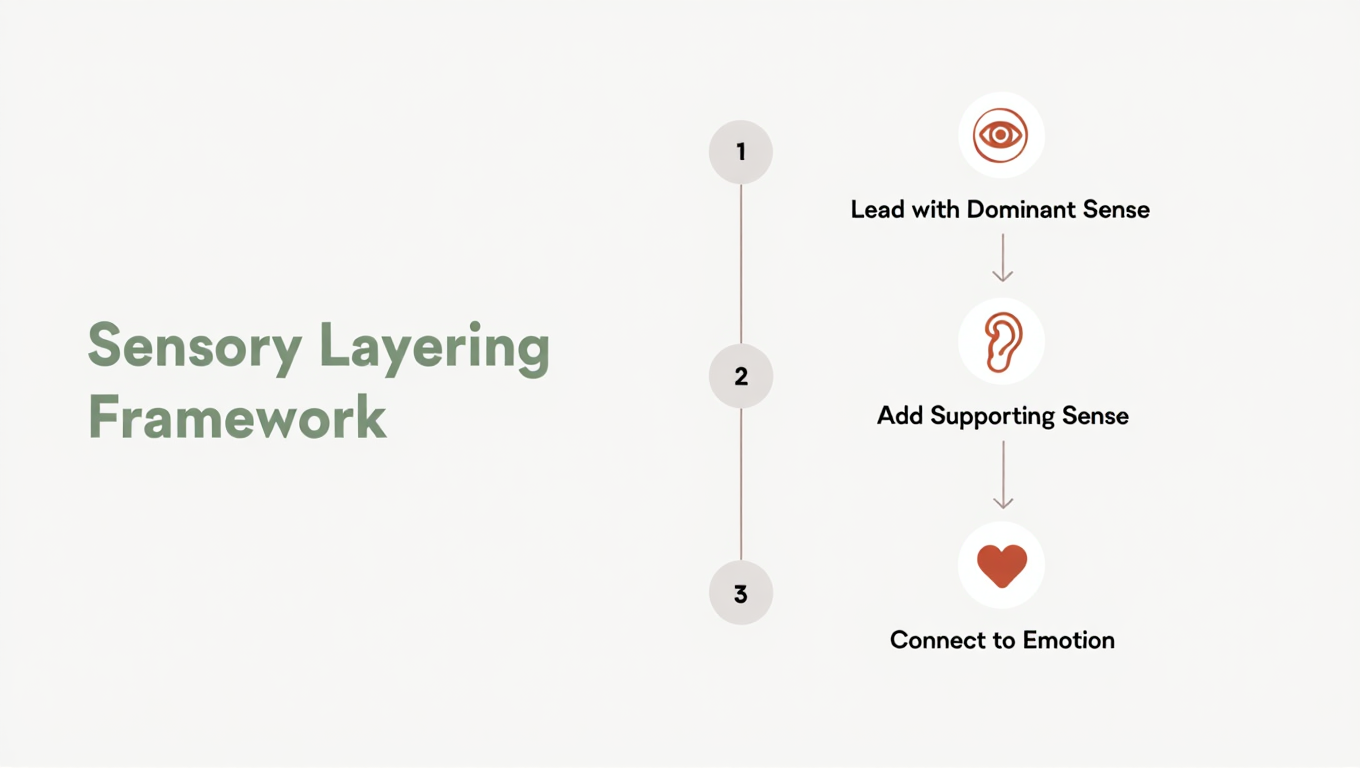
6 Steps to Balance Sensory Writing
- Lead with dominant sense
Example: Start with crackling fire (sound) in winter scene.
→ See sound words - Add one supporting sense
Example: Crackling fire + smoky smell.
→ See smell words - Show emotions physically
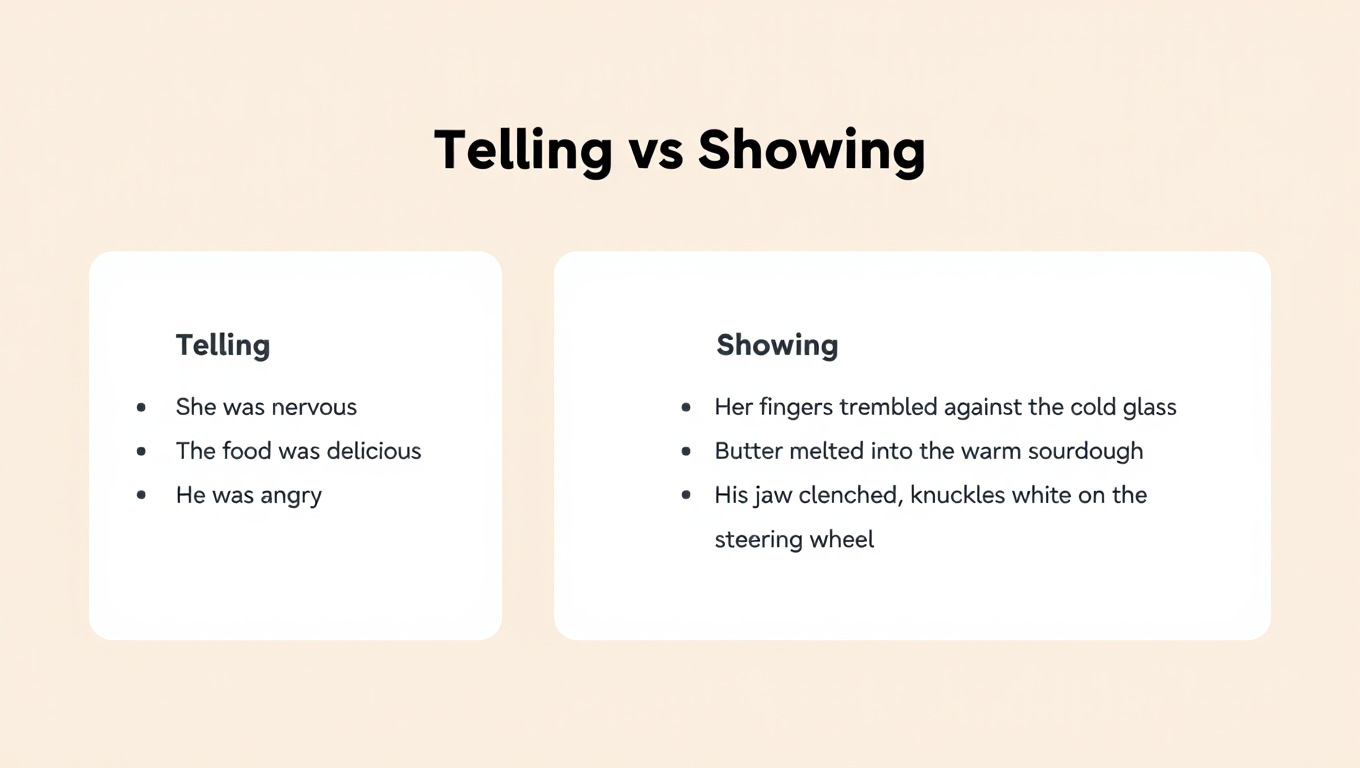
Example: Replace “She was scared” with clammy palms.
→ See five senses - Use smell/taste sparingly
Example: One whiff of burnt-sugar caramel triggers memory vs. describing every flavor.
→ See taste words - Match sensory tone to mood
Example: Tense scene = jagged rocks + shrill whistle vs. romantic = velvety touch + floral scent.
→ See touch words - Edit out weak verbs
Example: Replace “She was cold” → “Icy wind clawed her skin.”
→ See visual words
Strong verbs matter—see What Is a Verb? and 7 Simple Word Swaps to Fix Repetitive Writing.
Sensory Language in Poetry (With Examples)
Poetry thrives on compressed sensation. Instead of explaining emotion, poets suggest it physically:
- Cold wind = loneliness
- Heavy air = tension
- Sticky heat = exhaustion
Poetry Rhythm Tip: Sensory words create natural meter through consonant clusters (crackling, gritty).
Learn how word choice works with Adjectives Explained and Adverbs in Simple Words.
Reader Challenge:
Rewrite this sentence using 3 sensory words vivid scenes and share it in the comments:
The room felt strange.
Need more ideas? Try Easy Writing Prompts.
Download Your Sensory Cheat Sheet Now!
Grammar matters—see What Is Grammar in English?—but emotion comes from sensation.
If you want readers to remember your writing, use sensory words to make your scenes more immersive, not louder.
Download the cheat sheet
Share this post with a writer friend
Subscribe to EnglishAura for weekly writing help
Frequently Asked Questions
Words that describe sight, sound, touch, taste, and smell to create immersion.
Usually two or three, not all five.
Yes. Poetry depends on sensory compression.
Too much can—use it strategically.
Focus on what the character notices most.
Leave a Reply