
You’re staring at a blinking cursor, paralyzed by the fear that your first sentence sounds like a bad Hallmark card.
If you’ve searched for how to start a personal essay without being cringe, this fear already knows you. You don’t want to sound dramatic or fake. And you definitely don’t want readers rolling their eyes at the very first line.
That’s why the best way to begin a personal essay feels so confusing—especially when you’re stuck between wanting to sound deep and wanting to sound real.
Here’s the shift that changes everything: Cringe isn’t honesty. A strong personal narrative opening doesn’t try to impress. It feels simple, human, and real because it tries to connect.
In this guide, you’ll learn simple, non-awkward ways to start a personal essay without cringe, even if you’ve never felt confident writing one before.
You’ll also discover how to open honestly—without trying too hard.
Why Most Personal Essay Openings Feel “Cringe”
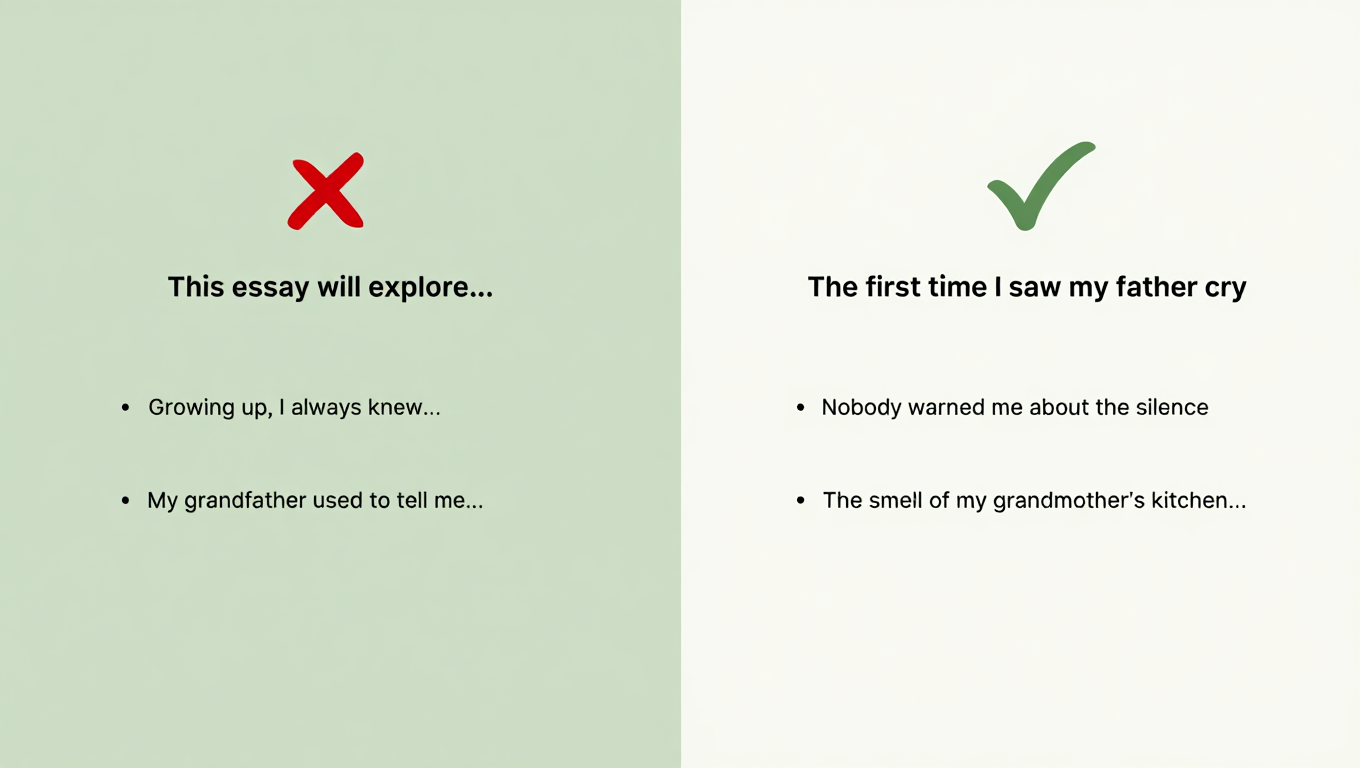
Most writers make the same mistakes when starting a personal essay. They explain too much, beginning with quotes. Or they try to sound “deep” instead of honest.
Common problems include:
► Over-explaining the topic (“Let me tell you about…”)
► Using generic quotes (dictionary definitions are the worst)
► Ignoring authenticity in writing
Readers connect to vulnerability and growth, not perfection. That’s why non-cliché personal essay introductions feel refreshing. They don’t perform. Instead, they reveal.
Before writing, it helps to understand basics like sentence clarity and structure. Review this guide on ‘what is grammar in English‘ for cleaner, confident writing.
Cringe vs Authentic: See the Difference
| Cringe Way | Authentic Way |
| “Webster’s defines courage as…” | “My knees shook as I stepped onto the stage.” |
| “I have always been a hard worker.” | “I stayed until 2 AM to fix the broken code.” |
| “Life is a journey of many miles.” | “The bus ride to Ohio felt like a lifetime.” |
3 Proven Ways to Start with Confidence
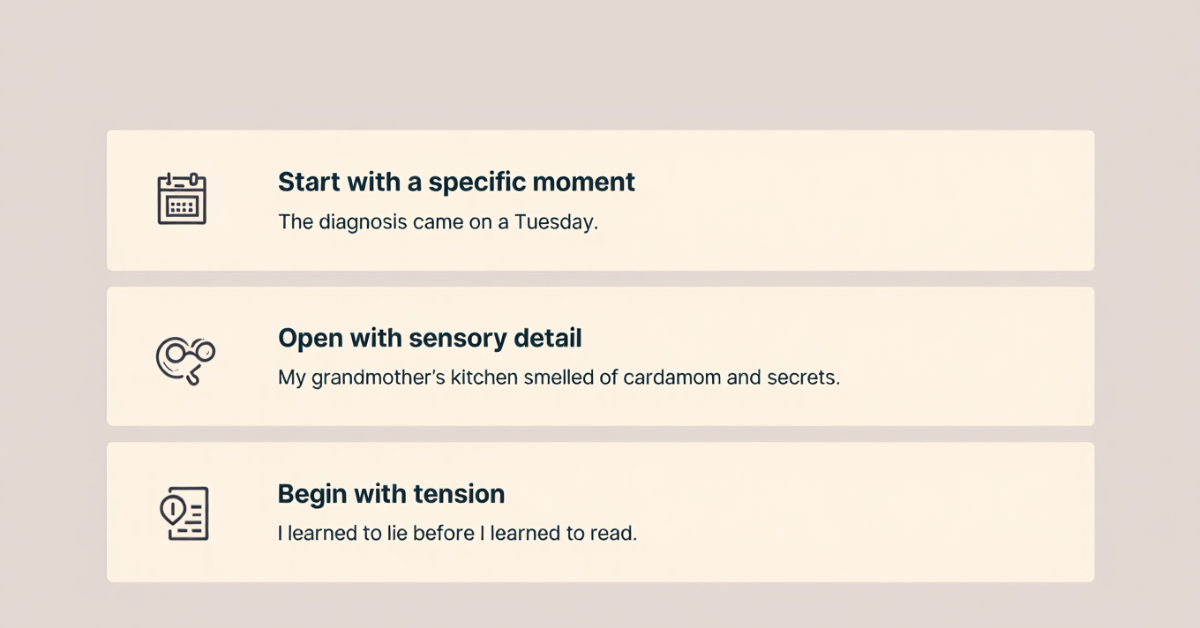
If you are looking for ways to begin a personal essay, try these three structures to ensure reader engagement.
1 – In-Media-Res: Start in the Middle
Starting directly inside a moment of action instead of explaining the background. Use vivid sensory details. Sensory details ground your reader in the scene using their five senses.
These details transform abstract ideas into tangible experiences, making your writing unforgettable—the smell of burnt toast or the cold sting of rain—to drop the reader directly into a moment.
That effect creates “presence”—the reader feels like they’re there, not just observing.
Use vivid sensory details:

What you saw: Colors, shapes, movements. Sharpens the visual punch.
Sounds Heard: Noises, whispers, silences. Builds tension or mood.

What you felt & Touched: Textures, temperatures, physical sensations. Evokes empathy.

Smell & Taste: This vivid sensory trigger deep emotions—like nostalgia from fresh rain or coffee.
Example:
My hands shook as I reread the message for the third time.
No backstory dump or its explanation. Just raw presence that pulls the reader in.
Quick Tips to Apply This
- Pick one high-stakes moment per scene.
- Layer 2-3 senses max—don’t overload.
- Read aloud: Does it make your skin prickle?
This technique shines in your poetry or grammar blog examples, turning lessons into vivid stories that stick.
2 – The Anti-Cliché Hook
For creative and non-cringe personal essay openings, think small. Avoid dramatic claims. Be specific and honest.
Instead, lean into specificity and raw honesty that reveals your voice right away. For example:
✓ Strong (small and honest): “He handed me a dog-eared notebook, and I pretended to know what to do with it.”
✗ Weak (dramatic claim): “The day I met my mentor, my entire world shifted.”
It hooks readers fast. “I didn’t realise it mattered until weeks later” shows real feeling up front. Readers trust it and want more. True words build quiet strength; big drama yells too loud.
Why it succeeds:
- Specificity paints vivid scenes over vague epiphanies.
- Honesty builds real connections, echoing life’s gradual shifts.
- Subtlety teases meaning, drawing readers in.
3 – The Relatable Question
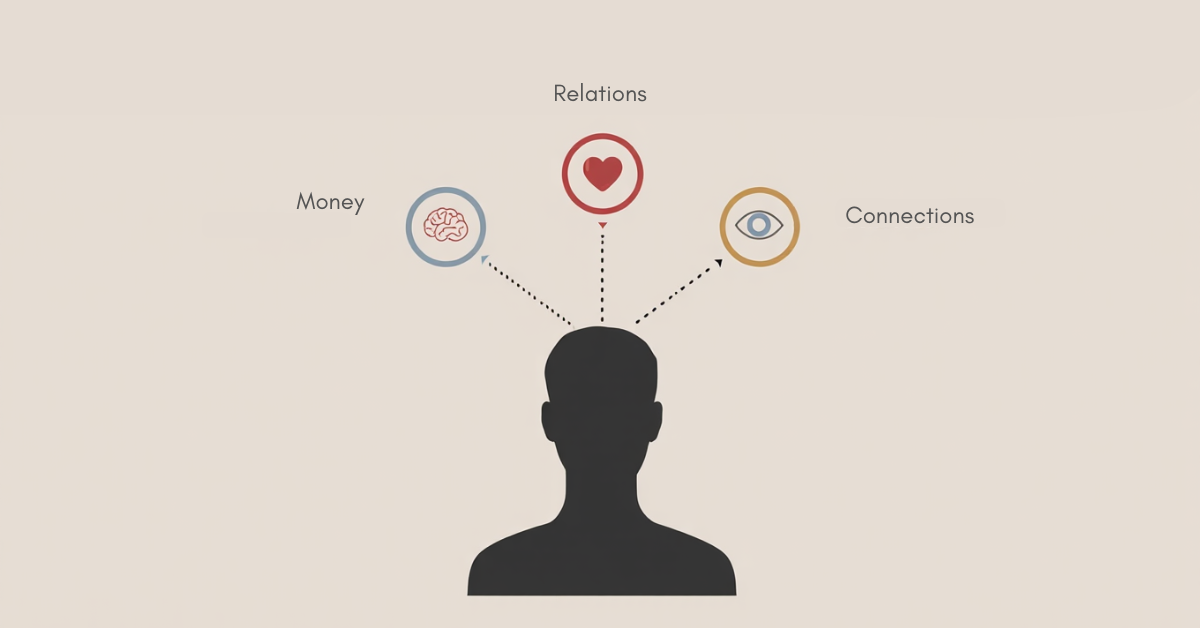
To craft a non-cringe personal essay intro, start by tapping into what your reader already wonders about life, emotions, or human quirks. This hooks them instantly without forced drama or clichés.
Why questions work so well:
- They mirror the reader’s inner monologue, creating an instant connection.
- Curiosity then builds and pulls readers deeper into your story.
Examples to steal and tweak:
- “Why do some memories refuse to fade, even after decades?”
- “Why do we regret silence more than our biggest mistakes?”
Shorten them to your voice, then dive into your personal answer. This feels authentic, not performative.
Finding a Hook That Actually Works
For beginners, the best personal essay hooks for beginners come from one “anchor moment.” This is a small scene that carries emotional weight.
To open a personal essay with a hook that works:
- Show action, not emotion
- Let reflection come later
- Transition smoothly into meaning
This is one of the most effective storytelling techniques used in strong personal essay introduction examples.
Once you have the reader’s attention, use simple conjunctions to create a smooth transition from your hook to your main reflection.
✏️ Practice tip: Use short writing drills like those in easy writing exercises to get new ideas fast.
How to Avoid Sounding Cheesy or Awkward
To learn how to write a personal essay intro that isn’t awkward, you must master reflective writing. Here is a quick checklist for how to avoid sounding cheesy in a personal essay:
- Write as you speak: If you wouldn’t say it at a coffee shop, don’t write it.
- Read it out loud: Your ears will catch “cringe” faster than your eyes.
- Cut the “thesaurus” words: Using confusing words to sound smart backfires.
- Aim for meaning: Focus on what you learned, not how dramatic the event was.
Beating Writer’s Block at the Beginning
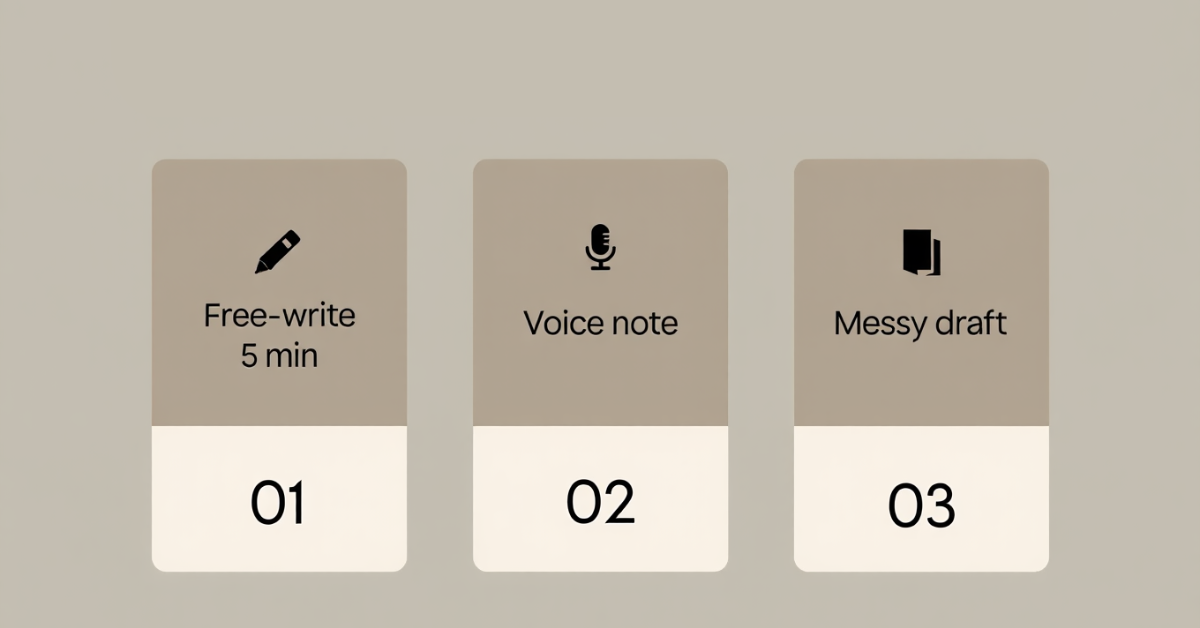
Stuck and wondering how to start a personal essay when you’re stuck?
Your first line doesn’t have to be final. Try this:
- ✓ Free-write for 5 minutes
- ✓ Record a voice note
- ✓ Start with a messy draft
These essay writing tips and tricks remove pressure. Keep your opening short.
Need extra help? Try these proven methods to beat writer’s block fast
Confidence Comes from Honesty!
If you remember one thing about how to start a personal essay without being cringe, remember this: stop performing.
Follow this personal essay opening advice. Let authenticity in writing lead. Cringe fades when honesty shows up. Try one small, real opening line today—and let the story grow from there.
Besides, if you need more inspiration, check out these easy writing prompts for absolute beginners to find your next great story.
Frequently Asked Questions (FAQs)
The best opening is a specific, sensory moment that introduces the central conflict or theme immediately.
Avoid “universal truths” and dictionary definitions. Focus on your specific, messy, and active vocabulary.
Use relatable questions or vivid scenes, via storytelling techniques like starting in the middle of a scene or revealing a surprising personal flaw.
It needs a balance of action (the hook) and insight (why the story matters to the reader). It must have authenticity, clarity, and emotional truth.
Leave a Reply