
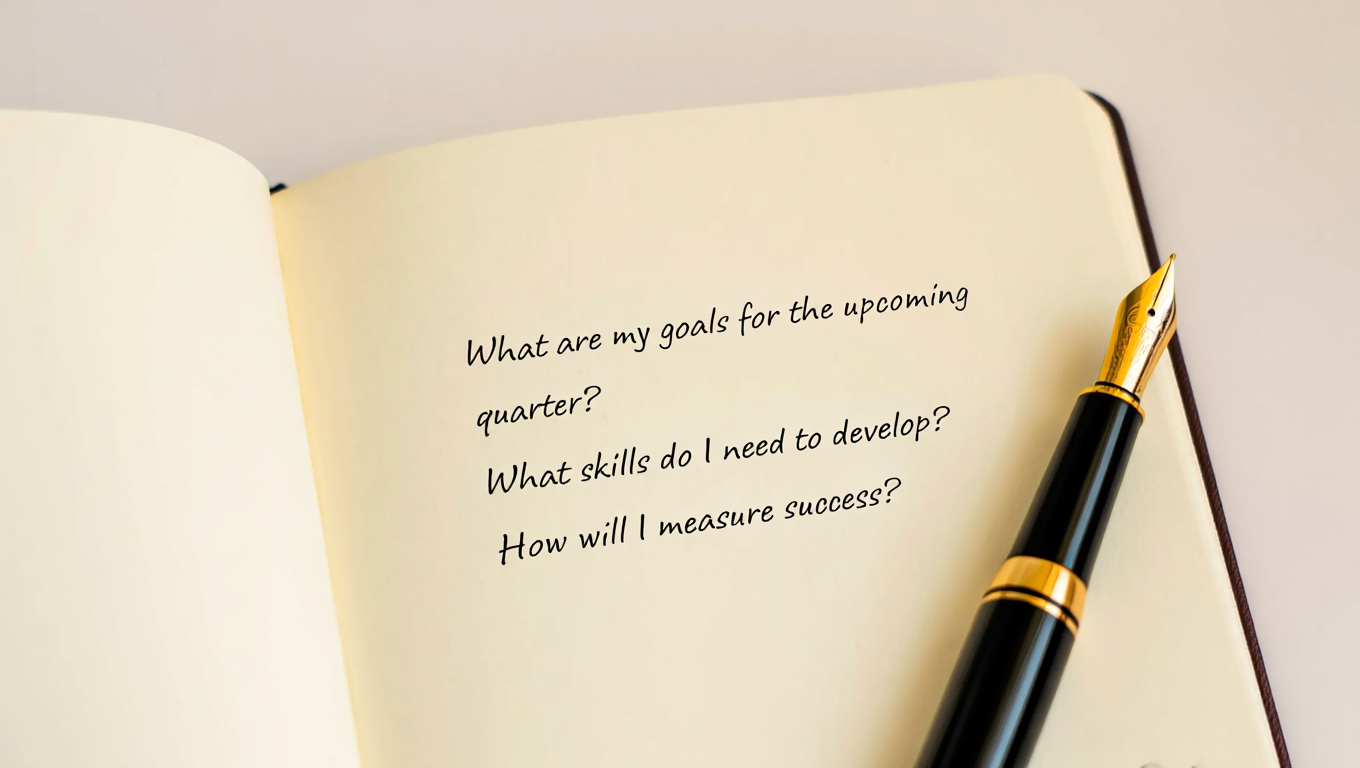
Notebook open, pen ready—yet your mind goes blank? You’re not alone. Many English learners and new writers stare at the empty page, frustrated enough to quit on day one.
Easy self-discovery journal prompts save the day. These self-discovery prompts unlock hidden rooms in your mind. Journaling boosts memory 15% per Harvard study while slashing stress 20%.
It sharpens emotional awareness and builds English fluency through richer vocabulary. Studies confirm journaling for self-growth uncovers strengths and hones focus—perfect for beginner journaling ideas.
This guide delivers 30 easy self-discovery prompts in six categories. Watch vague thoughts transform into deep insights for your authentic self.
Quick Start Tip
Set aside 10 minutes daily. Write freely—no judgment. Start with 40 Must-Know Emotion Words for Journaling for deeper feelings.
Blank Page vs. Prompted Reflection
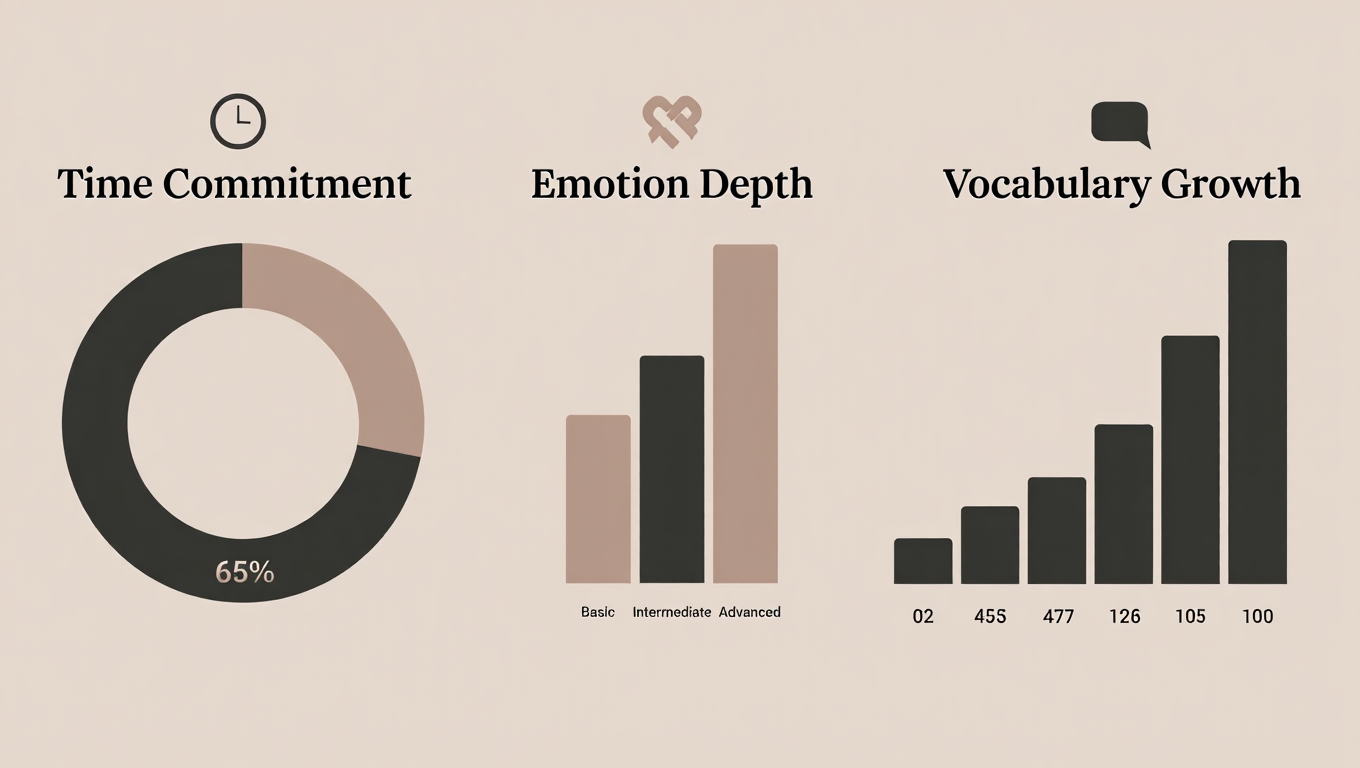
Struggling to start journaling? Self-reflection prompts transform vague thoughts into insights and richer English. See the difference:
| Feature | Blank Page Struggle | Prompted Magic |
|---|---|---|
| Start | “I don’t know…” | Clear self reflection prompts journaling question |
| Time | 20 mins staring | 10 mins flowing |
| Output | Vague (“Today okay”) | Deep (“Calm from walks—peaceful, serene”) |
| English Gain | Basic repeats | New words (stressed → overwhelmed) |
Before/After Examples:
- Before: “Okay day.” → After: “Felt invigorated finishing work early—energy surged like coffee.”
- Before: “Tired.” → After: “Exhausted after deadlines, but grateful for bed’s softness.”
Easy self-discovery prompts turn silence into sentences and boost creativity fast!
How to Use These Easy Self-Discovery Prompts
No perfect grammar required—these beginner-friendly self-awareness prompts are your daily mirrors for self-growth, not tests.
Inspired by timeless English literature like personal narratives in diaries (think quiet reflections in classic journals), they help you uncover your inner voice comfortably.
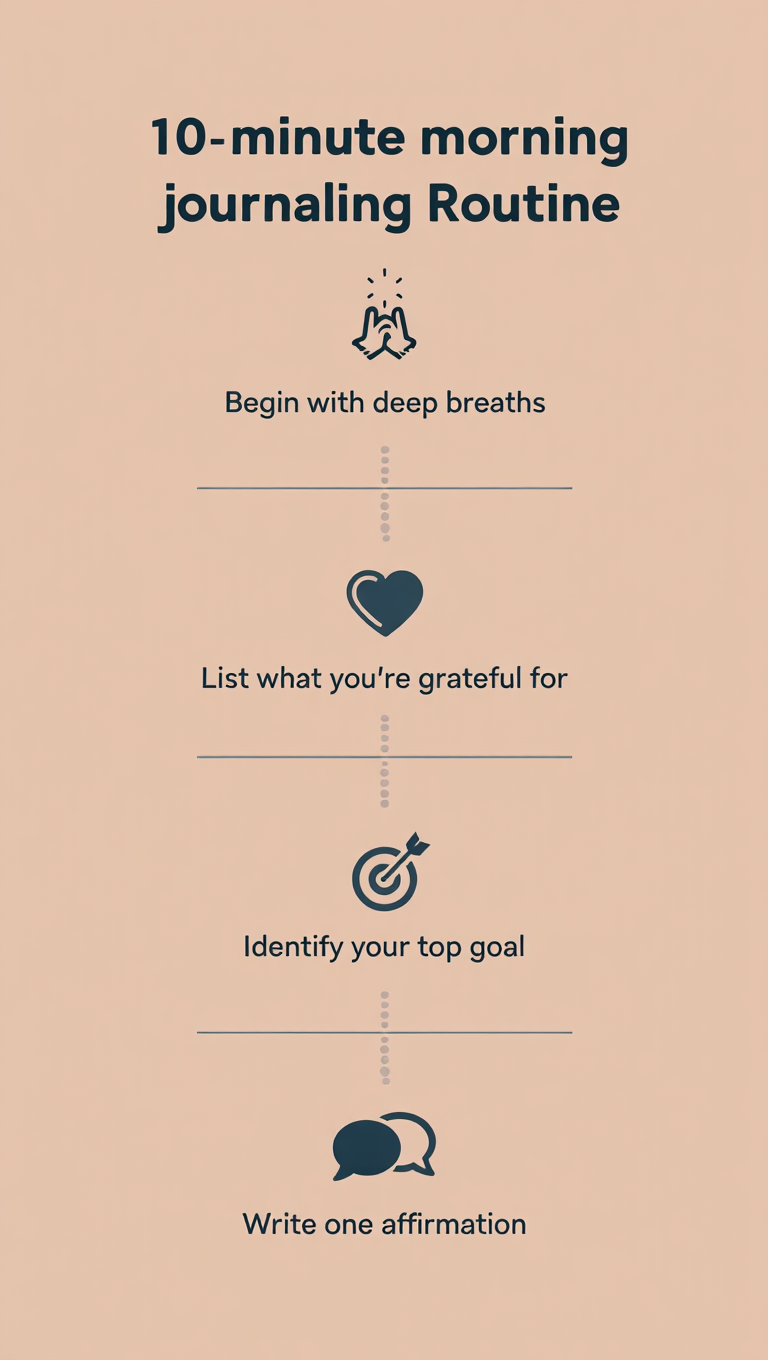
Follow these simple rules to start journaling for self-growth today:
- Keep it short: Write just 3-5 sentences in simple present tense—focus on feelings first.
- No editing: Let thoughts flow without fixing mistakes; embrace emotional reflection exercises.
- 10-minute rule: Use one daily journal starter or easy journal prompt for 10 minutes daily—short streaks beat rare long sessions.
- Track patterns: After a week, review entries for recurring themes to spark deeper insights.
Build a growth mindset journaling habit naturally. Over time, you’ll gain simple self-awareness and confidence in expressing yourself.
30 Easy Self-Discovery Prompts in 6 Categories
Unlock your inner self with these beginner-friendly journal prompts, grouped into 6 categories for easy self-exploration.
Journaling boosts emotional awareness, reduces stress, and sharpens self-reflection—perfect for global learners building English vocabulary through writing.
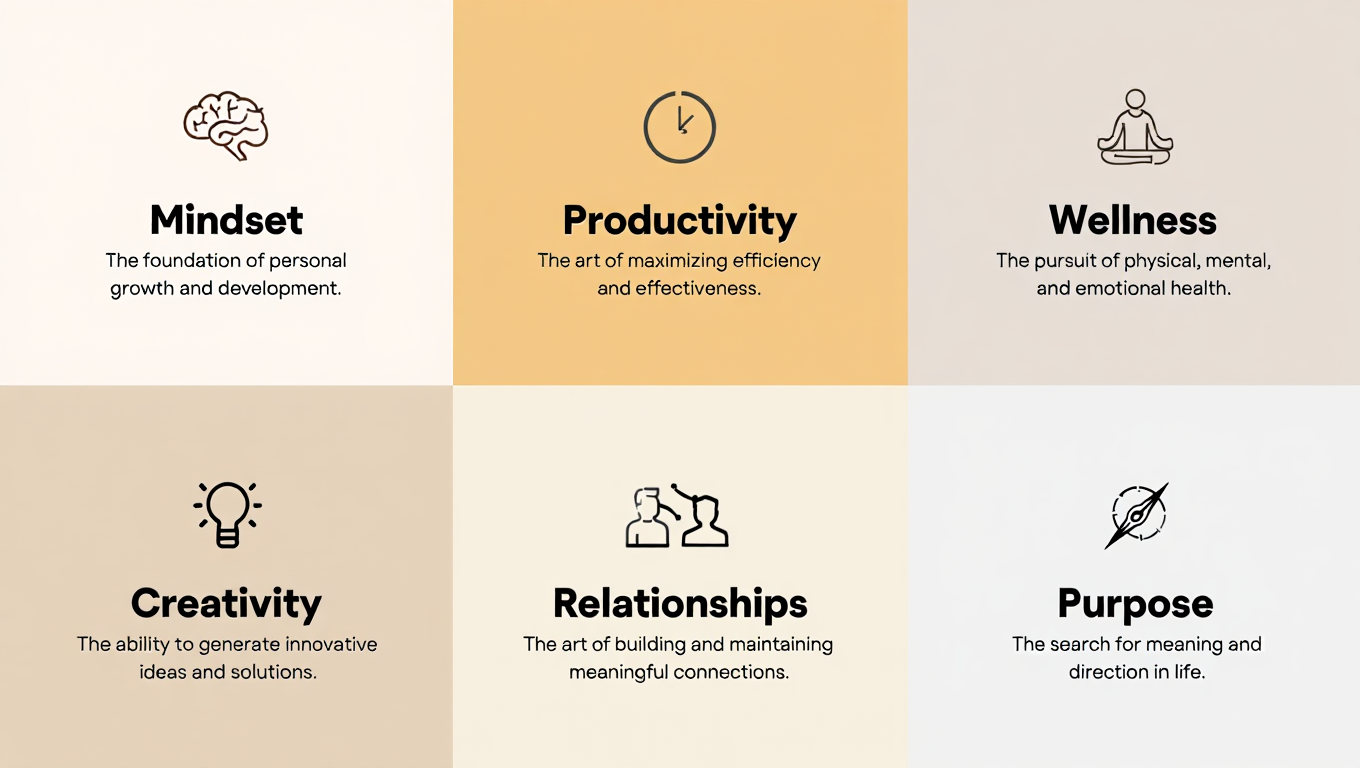
Each table includes Prompt | Sample Response | English Tip. Enhance your entries with vivid adjectives and strong nouns.
1. Inner Self + Values (Emotional Foundation)
Reflect on your current mood and traits to spark self-awareness. These self-discovery prompts reveal your core values and beliefs, helping you make better decisions. Journaling here sharpens abstract nouns for expressive English.
| Prompt | Sample Response | English Tip |
|---|---|---|
| What makes me calm? | Evening walks relax me deeply. | Calm=peaceful; present simple |
| Latest stressor? | Work overload leaves me overwhelmed. | Stressed=tired/overwhelmed |
| My unique trait? | I listen deeply to others. | Unique=one-of-a-kind; adjectives |
| When do I feel alive? | Dancing freely energizes me. | Alive=vibrant; -ly adverbs |
| Top joy source? | Reading poetry at dawn delights me. | Joy synonyms: delighted, blissful |
| Core value #1? | Honesty guides my choices. | Abstract nouns like integrity |
| Top family priority? | Shared meals build our bond. | Priority=important; prepositions |
| What do I stand for? | Kindness in tough times. | Present tense for beliefs |
| Non-negotiable belief? | Respect everyone’s journey. | Non-negotiable=essential |
| Daily value check? | Did I act with patience today? | Questions: reflexive pronouns |
3. Strengths + Fears (Personal Power)
Celebrate your hidden talents and wins with these journal prompts. They boost self-confidence and practice the past tense for storytelling.
| Prompt | Sample Response | English Tip |
|---|---|---|
| Proudest moment? | I finished my first poem. | Past tense: felt proud |
| Hidden talent? | Explaining ideas simply. | Hidden=secret; gerunds |
| What do friends say? | “You’re so creative!” they cheer. | Direct quotes; exclamations |
| Strength in challenge? | Stayed calm under pressure. | Past perfect for sequences |
| Biggest win? | Saved for my new laptop. | Achievement=big win; nouns |
| Smallest fear? | Speaking in big groups. | Afraid=nervous; comparatives |
| Fear’s lesson? | It pushes me to prepare better. | Possessives: fear’s impact |
| Step to face fear? | Join a writing circle. | Imperatives: “Join now!” |
| Past win over fear? | Shared my journal entry. | Past continuous: “was sharing.” |
| Fear as a teacher? | Builds resilience slowly. | Metaphors enhance depth |
Journaling boosts mental health, sparks creativity, and sharpens English skills through reflective writing.
Try these self-discovery journal prompts daily—like how Virginia Woolf used diaries for personal insight. For more on benefits, see Psych Central: Journaling Benefits.
Face worries softly to build resilience. Use these for inner growth.
3. Goals + Relationships (Future Connections)
Dream big with a growth mindset. Track progress like a personal roadmap.
| Prompt | Sample Response | English Tip |
|---|---|---|
| One monthly habit? | Journal 10 mins nightly. | Will for future goals |
| Dream in 1 year? | Publish my poetry book. | Countable nouns: “a book.” |
| Tiny step today? | Write one prompt now. | Adverbs: tiny, today |
| Measure success? | Feel more confident. | Comparatives: more confident |
| Biggest aspiration? | Teach English creatively. | Aspiration=dream; infinitives |
| Best listener? | My sister understands me. | Superlatives: best listener |
| Set a boundary? | Say no to draining chats. | When clauses for habits |
| Gratitude to one? | Thanks, friend, for your support | Appreciate + gerund |
| Improve connection? | Ask deeper questions. | Verbs: improve, connect |
| Ideal friendship trait? | Honest feedback, kindly. | Compound adjectives |
5 Journaling Hacks + EnglishAura Superpowers
- Emotion Swap: “Good” → invigorated (Emotion Words)
- Voice Check: Record entries, fix tenses (Verbs Guide)
- Adjective Boost: “Calm walk” → “serene stroll” (Adjectives)
- Poem Convert: Weekly entry → verse
- Vocab Track: Pair with Daily Talk Vocab
From Journal to Poetry: Unlock Your Inner Voice
Transform raw journal entries into poetry for deeper self-awareness and personal growth. English literature icons like Emily Dickinson drew from quiet reflections—try it yourself! Turn “Evening walks relax me” into a short poem:
Soft steps on dusk paths,
Calm whispers chase stress away,
Peace blooms in silence.
Research from the Greater Good Science Center shows reflective writing reduces stress and boosts well-being.
Interactive Challenges to Boost Your Journaling
Engage with these fun, quick activities to make your easy self-discovery prompts stick. No region-specific tools needed—just a notebook and curiosity!
- Quick Self-Discovery Quiz: Match your feeling to a category (comment your score below!)
- Stressed? → Inner Self
- Stuck? → Goals
- Lonely? → Relationships
- Unconfident? → Strengths
- Confused? → Values
- Vocab Match Game: Pair prompts with synonyms (e.g., calm → serene). Share yours in the comments!
Ready to Unlock Your Inner Voice? Take Action Now!
Easy self-discovery prompts transform blank pages into personal breakthroughs. You’ve got the tools—now use them for journaling for self-growth and English gains.
Your 3-Step Journaling Kickstart:
- Grab your notebook – pick one prompt, write 3 sentences today.
- Try Quiz #1 above: Match “Stressed?” to Inner Self. Comment your score!
- Share Your Favorite Prompt: Which sparked insight? Tag #JournalWithEnglishAura
Start today. One page builds clarity, confidence, and fluency. What’s your first prompt? Tell us in the comment section below!
FAQs: Easy Self-Discovery Journal Prompts
Short, clear questions that explore feelings, values, and habits.
Yes! Start with basic sentences—build emotional reflection exercises naturally.
3–5 times weekly works best. Daily 10 mins yields personal insight; even weekly works.
Minimal—focus on feelings.
Boosts clarity, like a mirror for your soul.
Leave a Reply