
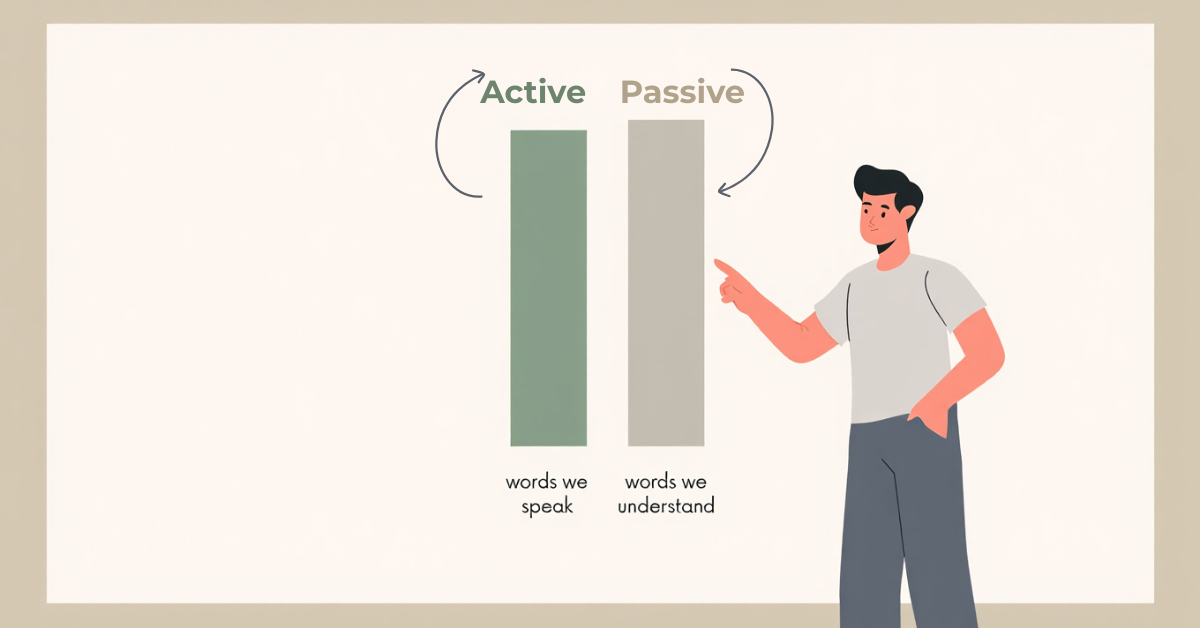
In simple terms, active and passive vocabulary explain how some words live on your tongue, ready to be spoken, while others stay quietly stored in your mind.
Understanding language vocabulary types (Active vs Passive) helps learners: speak with confidence, write with clarity, and learn more efficiently.
To understand this better, let’s first look at what active vocabulary really means.
What Is Active Vocabulary?

Active vocabulary means the words you use every day when you talk or write. These words come to your mind quickly and easily.
In simple words, ‘active vocabulary is your everyday usable words.’ Language experts also call this productive vocabulary because you produce these words while talking or writing. This is why it is linked to productive language use.
Productive vocabulary means words you can use by yourself when you speak or write.
Productive language use means actively using words to share your thoughts.
You can think of productive vs receptive vocabulary like this:
- Productive Vocabulary = For using words
- Receptive Vocabulary = For understanding words.
Here is an easy analogy:
Imagine your school bag.
The things you use every day—your pen, notebook, and eraser—are always on top.
Your active vocabulary is like those items. They are always ready when you need them. When you say:
- “I agree.”
- “Let’s start.”
- “That’s helpful.”
You are using active vocabulary.
These words come from your mind without effort. This quick recall is called productive word retrieval (meaning remembering and using a word quickly without stopping to think).
Now that we know which words we actively use, let’s explore the words we understand but don’t often say.
What Is Passive Vocabulary?
Now, what is passive vocabulary? It refers to words you understand but rarely use. The passive vocabulary meaning connects closely with receptive vocabulary (words you understand when you read or hear them), and receptive skills(reading and listening skills).
A key comparison here is reading vocabulary vs speaking vocabulary.
You may understand words like “inevitable” or “significant” in articles, but avoid them while speaking. This is passive word recognition, not full word recognition in active use.
Active vs Passive Vocabulary: Key Differences
Below is a quick comparison to highlight the difference between active and passive vocabulary:
| Aspect | Active Vocabulary | Passive Vocabulary |
|---|---|---|
| Usage | Speaking & writing (productive word retrieval) | Reading & listening |
| Size | Smaller | Larger (why passive vocabulary is larger than active vocabulary) |
| Skills | Expressive vocabulary knowledge | Listening reading vocabulary |
| Learning focus | Output | Input (vocabulary categories in language learning) |
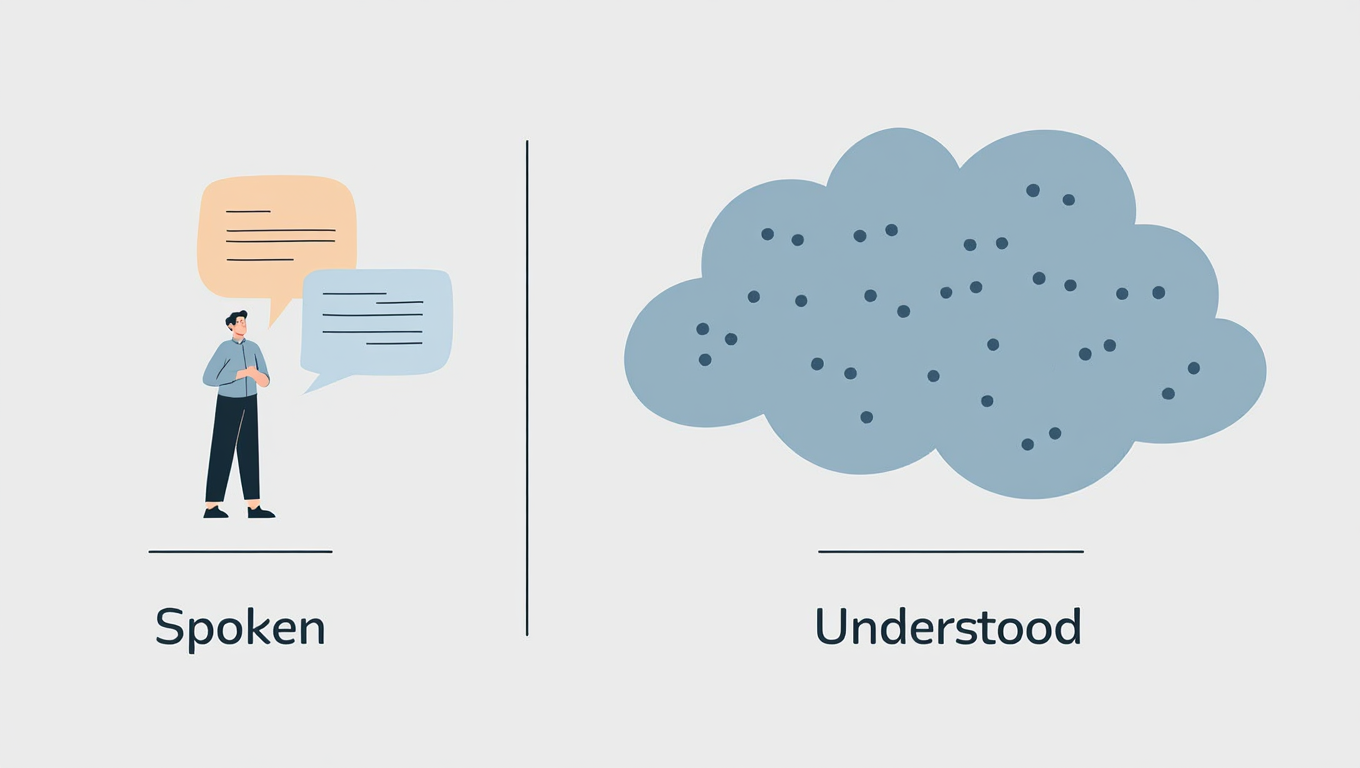
Differences between productive and receptive word knowledge?
Productive word knowledge means you can use a word yourself. You pick it up fast to speak or write—like creating a sentence on the spot. It needs lots of practice, like repeating words out loud every day.
Receptive word knowledge means you understand a word. You spot it when reading or listening, but don’t say it much. It grows easily from hearing or seeing words frequently, requiring no hard work.
Why Is Passive Vocabulary Larger Than Active?
The reason why passive vocabulary is larger than active is exposure. We read and listen far more than we speak. This builds listening & reading vocabulary quickly.
Over time, second language vocabulary development favors recognition first. High word frequency and vocabulary use strengthen understanding before usage.
Converting Passive to Active Vocabulary
Here’s the most practical part. Try These Proven Strategies:
- Practice speaking about how to turn passive into active vocabulary
- Write short sentences to learn how to build an active vocabulary from passive
- Repeat aloud ‘how to transfer passive vocabulary into active use‘
- Use role-play to improve active vocabulary for learners
- Apply tips to increase active vocabulary fast
- Follow vocabulary learning techniques for ESL students
- Review often for strong vocabulary retention strategies
- Observe real-life vocabulary usage patterns
Think of this like exercising muscles—you don’t grow strength by watching others lift weights.
These steps become even more powerful when used as part of regular language learning.
Active vs Passive Vocabulary in Language Learning
‘Active vs Passive Vocabulary in Language Learning‘ drives progress. It balances input and output while learning a language.
English vocabulary learning improves when learners understand ‘language vocabulary‘, ‘vocabulary types‘, and ‘language vocabulary types’.
Let’s wrap everything up with a few final thoughts you can apply starting today.
Mastering both receptive skills and productive vocabulary is the secret to fluency. When learners focus on ‘how to improve active vocabulary for learners‘, progress becomes visible.
Understanding ‘active vs passive vocabulary‘ helps turn silent knowledge into confident speech. Start small, practice daily, and let your words work for you!
People Also Ask
Active words are used(produced); passive words are understood(recognized).
Output vs input.
Active vocabulary matters more for speaking.
Role-plays and quizzes. See active vocabulary vs passive vocabulary example sentences in class.
Leave a Reply