
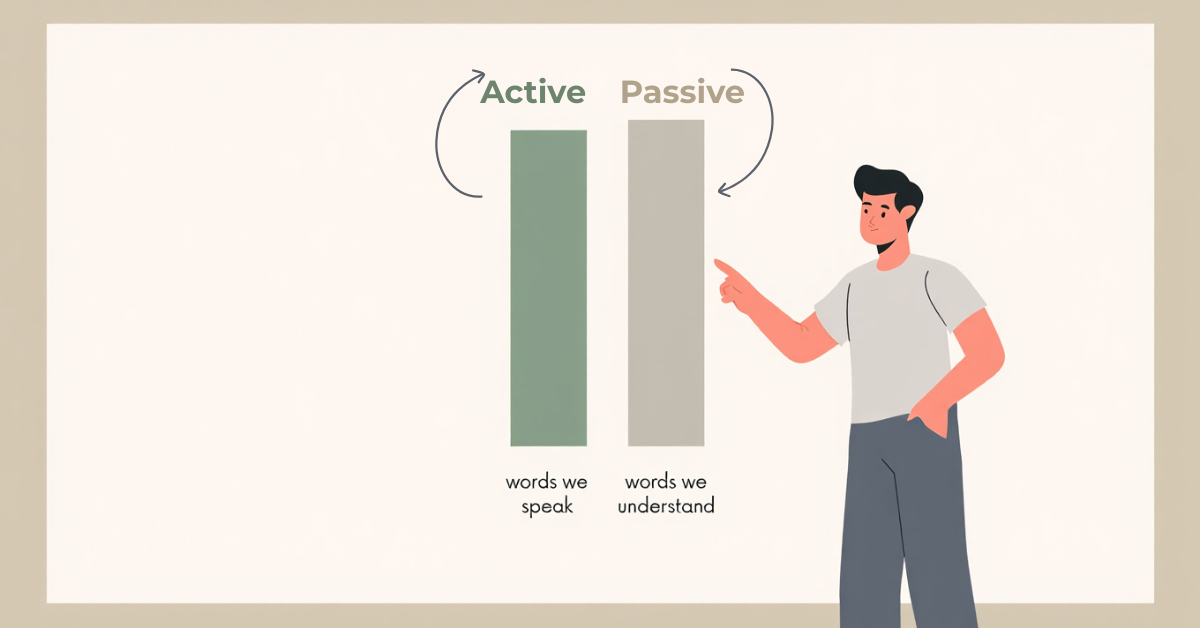
Understanding vocabulary is one of the most important steps in improving writing and speaking skills. Many learners know hundreds of English words, but they still struggle to use them in conversations or writing. This happens because not all vocabulary works the same way in our minds.
Some words are easy to use in daily communication, while others stay in our memory and only come to mind when we read or listen. This difference is known as active and passive vocabulary.
In this guide, you will learn:
- What active vocabulary means
- What passive vocabulary means
- The key differences between them
- Why is passive vocabulary larger
- and how to turn passive vocabulary into active vocabulary
By the end, you will clearly understand how vocabulary works and how to improve it step by step.
What Is Active Vocabulary?

Active vocabulary means the words you use every day when you talk or write. These words come to your mind quickly without much effort.
In simple terms:
Active vocabulary = words you can use easily in communication.
Language experts also call this productive vocabulary because you produce these words when expressing ideas. In simple words, ‘active vocabulary is your everyday usable words.’
Key Concept:
Productive vocabulary means words you can use by yourself when you speak or write. Productive language use means actively using words to share your thoughts.
Examples of Active Vocabulary
You use active vocabulary when you say:
- I agree with you.
- This idea is helpful.
- Let’s start the work.
- I need more time.
These sentences use simple words that come naturally during speaking and writing.
Think of active vocabulary like tools on your desk. You use them every day, so they are always within reach.
If you want to improve word clarity in sentences, you can also read our guide on unclear sentence examples and fixes.
What Is Passive Vocabulary?
Now, what is passive vocabulary? It refers to words you understand but rarely use in speaking or writing.
In simple terms:
Passive vocabulary = words you recognize but do not actively use.
This is also called receptive vocabulary because you receive or understand these words while reading or listening.
Examples of Passive Vocabulary
You may understand words like:
- inevitable
- significant
- complex
- determine
You can understand them in books or articles, but you might not use them in daily conversations.
This means the words exist in your memory, but they are not yet part of your active use.
Think of passive vocabulary like books in a library. You know they are there, but you don’t pick them up every day.
You can also explore common confusing words in English to strengthen your vocabulary.
Active vs Passive Vocabulary: Key Differences
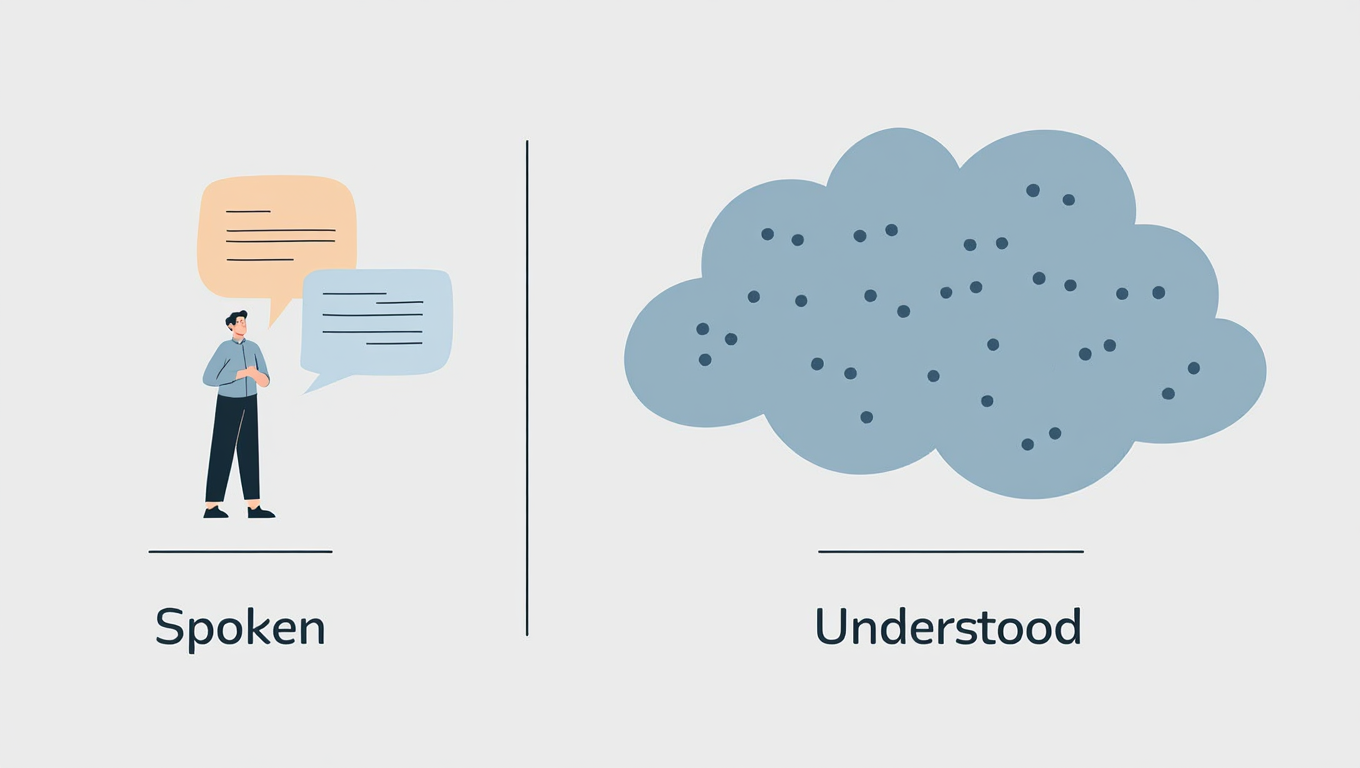
Here is a simple comparison to understand the difference between active and passive vocabulary:
| Aspect | Active Vocabulary | Passive Vocabulary |
|---|---|---|
| Usage | Speaking & writing | Reading & listening |
| Function | Producing words | Understanding words |
| Size | Smaller | Larger |
| Skills | Requires practice | Builds through exposure |
| Goal | Fluency and expression | Comprehension and learning |
In short:
- Active vocabulary helps you express ideas.
- Passive vocabulary helps you understand information.
Both are important for language learning.
Using better word choices can also help reduce repetitive writing in essays.
Productive vs Receptive Vocabulary (Simple Explanation)
Another way to understand this concept is through productive and receptive vocabulary.
Productive Vocabulary
- Words you can speak or write
- Requires practice and repetition
- Builds confidence in communication
Example:
You say: The result is important.
This is productive vocabulary.
Receptive Vocabulary
- Words you understand
- Comes from reading and listening
- Builds naturally over time
Example:
You read: The results were significant and inevitable.
You understand it, but may not use it yourself. This is receptive vocabulary.
You can think of productive vs receptive vocabulary like this:
- Productive Vocabulary = For using words
- Receptive Vocabulary = For understanding words.
Why Is Passive Vocabulary Larger Than Active?
We read and listen more than we speak and write.
For example:
- You read articles
- Watch videos
- Listen to lectures
- Read books
This helps you recognize many words.
But unless you practice speaking or writing, those words stay passive.
So naturally, passive vocabulary grows faster than active vocabulary. This is normal in language learning.
Convert Passive Vocabulary into Active Vocabulary
This is the most important part of vocabulary learning. Here are simple and practical steps.
1. Speak New Words Daily
Try using new words in conversations.
Example:
Instead of saying “big problem”, say “serious problem”. Practice builds confidence.
2. Write Short Sentences
Write 3–5 sentences using new words.
Example:
- The situation is serious.
- The decision was important.
- The result was significant.
This activates vocabulary.
3. Read and Repeat
When you find a new word:
- read it
- understand it
- repeat it aloud
- Use it in a sentence
This helps move words into active memory.
4. Practice with Real-Life Situations
Use words in daily situations:
- writing essays
- speaking with friends
- journaling
- storytelling
Real usage makes vocabulary stronger.
5. Review Words Regularly
Repetition is important. Review words every few days. Without review, words return to passive vocabulary.
Active vs Passive Vocabulary in Language Learning
Both vocabulary types are necessary for fluency.
Passive vocabulary helps you:
- understand books
- read articles
- follow conversations
Active vocabulary helps you:
- speak clearly
- write better
- express ideas confidently
Balanced learning improves language faster.
The goal is not to remove passive vocabulary, but to gradually convert it into active vocabulary.
Practical Tip for Students
A simple daily routine:
- learn 5 new words
- write 3 sentences
- speak them aloud
- Use them in writing
Within a few weeks, your vocabulary will improve noticeably. Small daily practice creates strong results.
Active and passive vocabulary are two important parts of language learning. Active vocabulary helps you communicate clearly, while passive vocabulary helps you understand information.
The key to fluency is turning passive vocabulary into active vocabulary through daily practice. Speaking, writing, and regular revision can slowly move words from memory into real use.
Start small, practice consistently, and your vocabulary will become stronger over time.
You can also read our guide on why essays sound confusing to improve clarity in writing.
People Also Ask
Active words are used(produced); passive words are understood(recognized).
Output vs input.
You can improve your active vocabulary by speaking, writing sentences, repeating new words, and practicing regularly
Is passive vocabulary important?
Leave a Reply