

Do you know that the average reader decides to stay or leave in under ten seconds? In the modern world, the reader’s attention spans in fiction; your first sentence is your only handshake.
If it’s weak, the reader is gone. Mastering creative writing opening lines in 2026 isn’t about being “fancy”; it’s about hooking the reader instantly.
Whether you are learning how to start a novel in 2026 or looking for engaging first lines for short stories, you need a strategy.
We’ve all seen story hook examples for beginners, but today, we are diving into story starts that grab readers immediately by blending emotional curiosity with professional narrative hook techniques.
Why the First Line Decides Everything
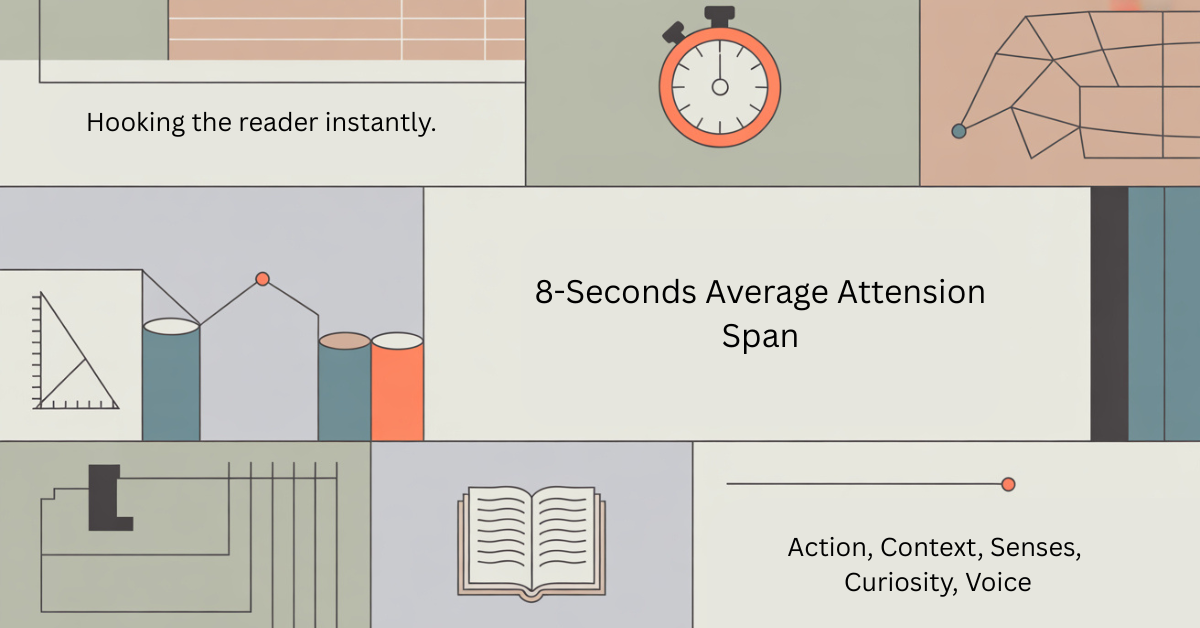
The first line of your story is the “Big Bang” of your literary universe. It is the moment you employ reader immersion techniques to pull the audience out of their world and into yours.
The Hook-to-Internal-Monologue Transition: A great hook gets them in, but the transition keeps them there. Immediately following your hook, bridge the gap by showing the character’s internal reaction.
This moves the reader from “What is happening?” to “How does this feel?”—cementing the emotional connection.
Readers subconsciously scan your first paragraph for three vital signals:
- Is there tension?
- Is something changing?
- Do I care?
Think of your opening like a magnet; it should attract intense interest while pushing away the mundane. To master how to start a story that hooks readers, you must understand the storytelling patterns that keep readers reading. It isn’t just about “what” happens, but “how” it is presented.
Strong vs. Weak Openings: Finding the Balance
A professional opening introduces a clear inciting incident, hints at stakes and tension, and invites curiosity without over-explaining. To ensure your story lands on the “strong” side, consider these differences:
| Feature | Strong Opening (The Hook) | Weak Opening (The Fluff) |
| Action | Drops the reader into the heart of a conflict. | Starts with mundane routines (waking up, weather). |
| Context | Suggests a deeper world through small clues. | Relies on “info-dumping” long backstories. |
| Senses | Uses active sensory details to ground the reader. | Relies on vague, generic descriptions. |
| Curiosity | Poses a question that demands an answer. | Explains so much that there is no mystery left. |
| Voice | Establishes a bold, unique narrative tone. | Sounds hesitant or follows a “standard” template. |
If grammar clarity worries you, revisit this guide on what grammar is in English—a clean, professional structure is what allows your most powerful ideas to shine.
5 Battle-Tested Story Starts for 2026
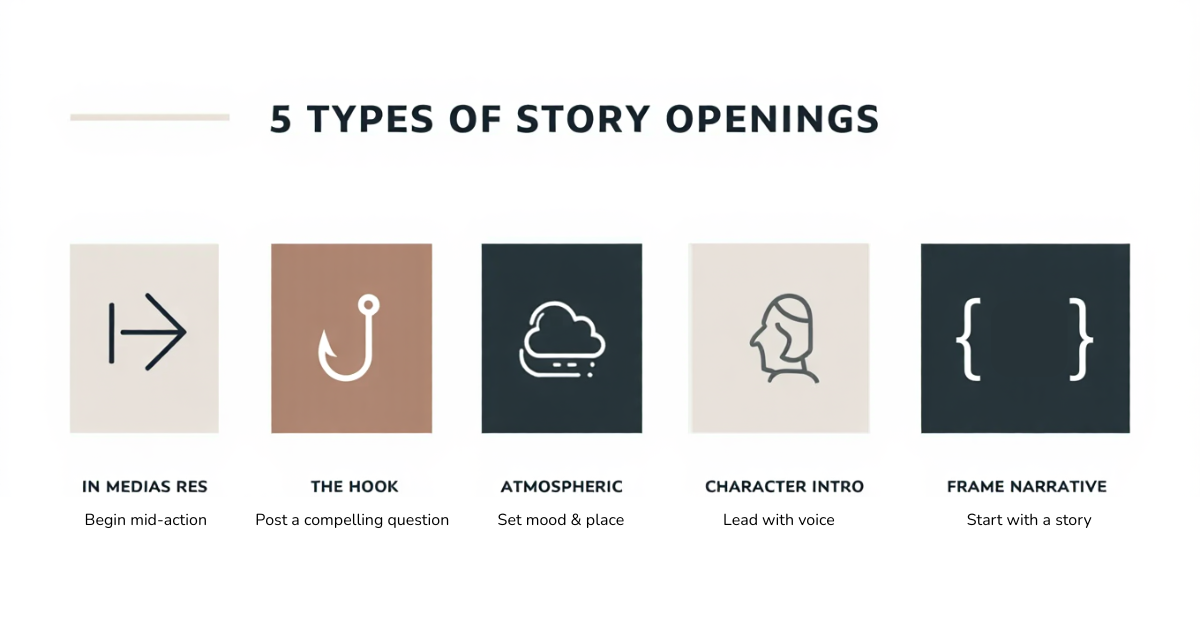
1. Action-Oriented Openings (In Medias Res)
Instead of starting with the weather or a slow-burning history lesson, drop your reader directly into a crisis. This technique is known as in medias res.
It is one of the most effective action-oriented story starts for modern audiences who crave immediate engagement.
By starting in the middle, you bypass the fluff and force the reader to keep turning pages to find the answers they need.
How to Start a Story in the Middle of Action:
- Skip the Backstory: Launch straight into movement or a confrontation. A first line like, “The door slammed before she could explain,” creates instant tension without needing a preamble.
- Prioritize Sensory Details in Openings: Use smell, sound, or touch to ground the reader. Mentioning the smell of smoke or the grit of gravel makes the scene feel immediate and real.
- Raise Immediate Questions: A “punchy” start creates a mystery. When a character is already running or reacting, the reader stays to find out why.
- Match the Genre: High-energy starts are especially effective for thrillers and fantasy, where establishing high stakes on page one is crucial.
Pro-Tip: Focus on the “Next Five Minutes.” Don’t worry about how the character got there; only focus on what they must do right now to survive the moment.
2. Mystery That Creates Curiosity
Curiosity often hooks deeper than action. To master how to write a story hook that creates mystery, give your reader a puzzle instead of a summary.
By using first sentence ideas that raise curiosity—such as stating something impossible or contradictory—you force the reader to hunt for answers.
- Hint at a Secret: Create opening sentences that create an immediate emotional connection by suggesting a hidden truth.
- Withhold Context: Intentionally leave out details to build a “heavy,” atmospheric setting.
- Contrast the Narrative: Try a line like, “Everyone else remembered the fire. I remembered the silence.”
Pro-Tip: Use “The Unanswered Question.” Ensure your mystery hook makes the reader ask why or how within the first ten words.
3. Purposeful Protagonist/ Character Intros
A great protagonist introduction isn’t a biography—it’s a window into their soul through action. When learning how to start a novel in 2026, focus on a moment of tension that reveals a character’s unique traits or flaws right away.
- Avoid the “Info Dump”: Use non-cliché story openings for new writers that show a character doing something meaningful rather than just describing them.
- Skip the Mirror Cliché: Focus on methods to avoid clichés in story openings by starting with a conflict, like: “I was fired before lunch—and deserved it.”
- Keep it Dynamic: If you’re stuck, use these easy writing exercises to get new ideas fast to find a high-stakes moment for your character.
Pro-Tip: Give your character an immediate “Micro-Goal.” Even if it’s just trying to hide a bloodstain or find a lost key, it shows character through movement.
4. Dialogue-Driven Starts That Feel Alive
Dialogue works when the conversation reveals conflict immediately. To master this, use the “Who, Where, Why” Rule: within the first three lines of dialogue, the reader should know who is speaking, where they are standing, and why the conversation is tense.
Example:
“If you leave this room now,” she whispered, gripping the edge of the kitchen table, “don’t expect the locks to be the same when you return.”
This technique excels at hooking the reader instantly and is common in literary opening sentence examples.
5. Match the Opening to Your Genre
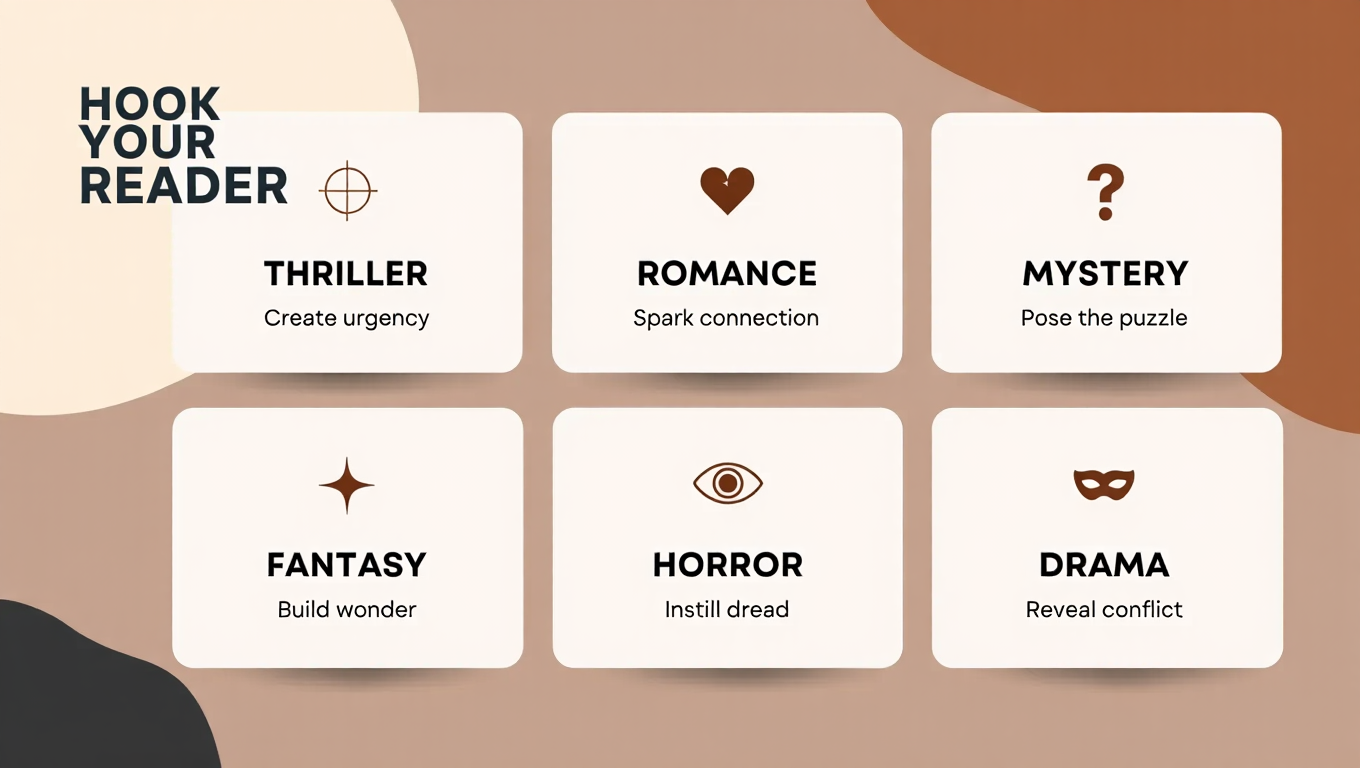
Your opening should feel intentional, not random. By choosing genre-aware openings, you signal to the reader that you know exactly what they’re looking for.
Whether you’re using modern fiction opening techniques or focusing on sensory details in openings, matching your style to your category is key.
| Genre | Best Hook Style |
| Psychological Thrillers | Use opening line examples for psychological thrillers that are unsettling to users. |
| Young Adult (YA) | Focus on the best story that starts for young adult fiction with a unique voice. |
| Competitions | Grab attention with short story opening lines for creative writing competitions. |
| Literary & Fantasy | Use modern fiction opening techniques or sensory details in openings. |
Pro-Tip: Read the first lines of the current Top 10 books in your specific genre. Identify the common “vibe” and aim to elevate it.
Common Pitfalls: How to Avoid the “Eye-Roll”
Many beginners fail by “info-dumping.” If you want to know how to start a fantasy novel without an info dump, the answer is: Trust your reader. Don’t explain the magic system in paragraph one.
Focus on methods to avoid clichés in story openings. If you find yourself stuck, these 10 weird writing exercises to beat writer’s block can help you reset your brain.
Craft Your Aura
Creating a great opening isn’t about using tricks; it’s about writing with intention. By mastering story starts that grab readers immediately, you can transform a flat draft into a genuine page-turner.
The goal is to refine your first chapter hook ideas until the story pulls the reader in naturally—clarity will always beat being “clever.”
- Try different hook strategies to see which pulls readers in best.
- Study successful lines to learn how to balance tension and voice.
- Stay creative to boost your unique style and keep the story moving.
The perfect opening doesn’t need to shout; it whispers, and the reader leans in.
Helpful Resources:
Frequently Asked Questions
Focus on immediate conflict, tension, curiosity, a unique voice, or a startling setting.
Use conflict early and avoid explaining everything.
It signals whether the story is worth the reader’s time.
Create a “Knowledge Gap.” Tell the reader just enough to make them realize they are missing a vital piece of information.
Ideally, it’s the very first sentence, but a powerful opening paragraph can span the first 100 words.
Start with action or dialogue, then layer context gradually.
Leave a Reply